
Caltrans Workers Rescue Driver After Car Crashes Into Maintenance Truck

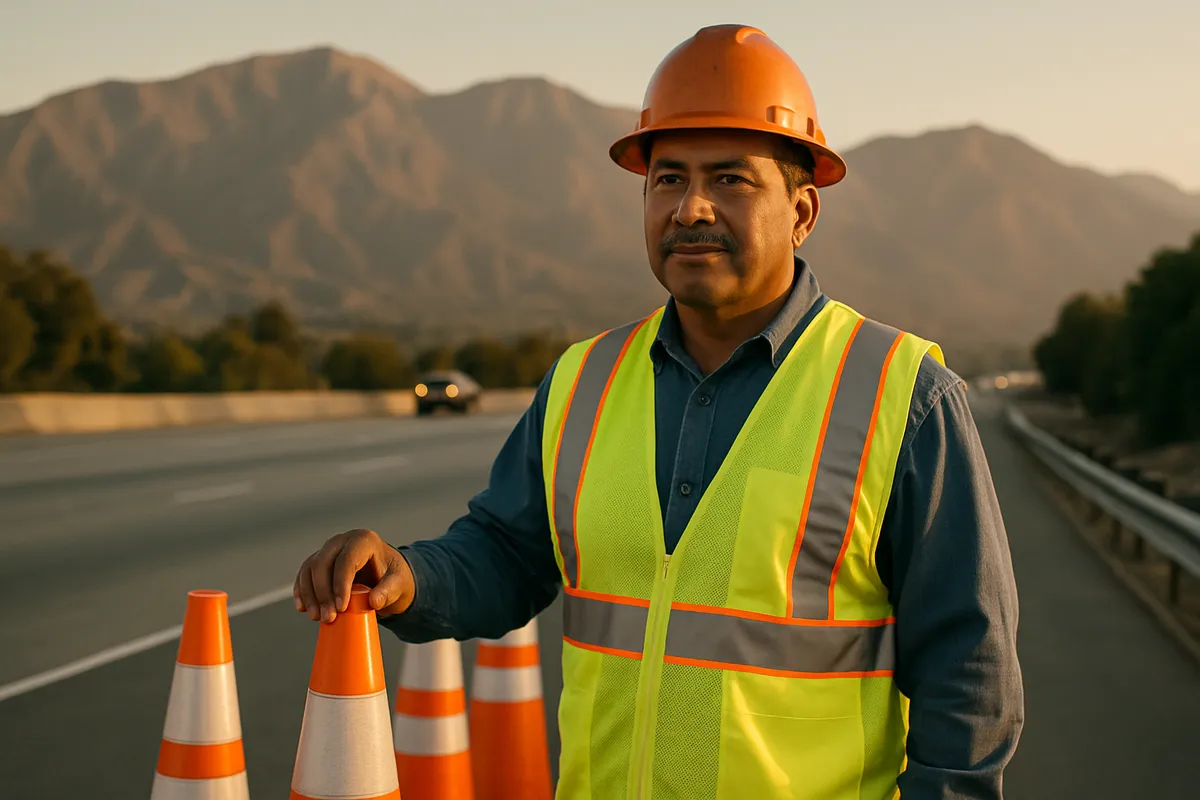
A driver was rescued after crashing into a Caltrans maintenance truck on the 5 Freeway in Pacoima, according to KTLA 5 News. Emergency responders and Caltrans workers acted quickly to assist the driver while authorities investigated the circumstances of the collision. The rescue is a testament to the crews on scene — and a reminder that highway work zones are among the most dangerous workplaces in California, where the “office” is a strip of pavement feet away from traffic moving at freeway speeds.
Crashes like this one raise two distinct legal questions: what protections exist for the workers standing in that work zone, and what options does an injured motorist or worker have when negligence caused the collision?
Work Zone Crashes Are a Persistent — and Deadly — Problem
The numbers behind highway work zone accidents are sobering. According to the Federal Highway Administration, 905 people were killed in work zone crashes nationwide in 2023, and work zone fatalities have climbed roughly 50 percent over the past decade. The danger to road crews specifically is written into Caltrans’ own history: the agency reports that 195 Caltrans employees have been killed on the job since 1921, most of them on active roadways.
The physics are unforgiving. Maintenance trucks — often equipped with crash attenuators precisely because impacts are so common — absorb hits from vehicles traveling at full freeway speed, driven by motorists who are speeding, distracted, or simply not registering the cones and warning signs until too late.
Workers’ Compensation: The First Layer of Protection
For a Caltrans employee or any highway worker injured in a work zone collision, California’s workers’ compensation system is the starting point. It is a no-fault system administered through the Division of Workers’ Compensation: the injured worker doesn’t have to prove the employer — or anyone — was negligent. Benefits generally include:
- Medical treatment for the work injury, from emergency care through surgery, therapy, and ongoing management
- Temporary disability payments replacing a portion of wages during recovery
- Permanent disability benefits when the injury leaves lasting limitations
- Supplemental job displacement benefits if the worker can’t return to their old job
Those benefits are essential — and limited. Workers’ comp pays nothing for pain and suffering, emotional distress, or the full measure of lost earnings. For a worker with catastrophic injuries, the gap between workers’ comp benefits and actual lifetime losses can be enormous.
The Second Layer: Third-Party Claims Against Negligent Drivers
Here’s what many injured workers don’t realize: accepting workers’ compensation does not waive the right to sue a negligent third party. When a motorist crashes into a work zone, the injured worker typically has both a workers’ comp claim (through the employer) and a personal injury claim against the at-fault driver.
The third-party claim opens categories of compensation workers’ comp never touches:
- Pain and suffering and emotional distress
- Full lost wages and diminished earning capacity, not the partial wage replacement workers’ comp provides
- Future medical and rehabilitation costs beyond the workers’ comp framework
The two claims interact — the workers’ comp insurer usually asserts a lien against the third-party recovery — so coordinating them correctly is critical to keeping the maximum amount in the worker’s pocket. We covered similar dual-claim issues in our post on workplace deaths and catastrophic injuries in Rancho Cucamonga.
Depending on the facts, liable third parties in work zone cases can also include contractors responsible for traffic control plans, equipment manufacturers whose safety devices failed, and other companies operating in the zone.
What About the Driver Who Crashed?
Not every motorist who hits a maintenance vehicle was driving recklessly — and injured drivers have rights too. Liability in a work zone crash depends on the specifics: Was the work zone properly signed and coned? Were warning vehicles and attenuators positioned correctly? Was the lane closure compliant with traffic control standards? Was the driver speeding or distracted?
California’s pure comparative negligence rule (from Li v. Yellow Cab Co., 1975) means fault gets divided by percentage, and an injured person can recover even if they were partly to blame — their award is simply reduced by their share. One crucial caveat for anyone with a claim involving Caltrans or another public entity: California’s Government Claims Act generally requires filing an administrative claim within six months, a fraction of the standard two-year deadline for injury lawsuits.
Evidence Decides These Cases
Work zone collisions generate an unusual amount of evidence — if someone acts fast enough to preserve it. That includes CHP collision reports, traffic control plans and signage logs, dashcam and traffic camera footage, vehicle event data recorders, and statements from crew members who saw the crash unfold. Camera footage in particular is routinely overwritten within days or weeks, which is why an early call to an attorney can be worth more than almost anything else a victim does.
What This Means for Injury Victims
The Pacoima crash ended with a rescue rather than a tragedy. But every work zone collision — whether the injured person is a road worker or a motorist — triggers overlapping systems: workers’ compensation, auto insurance, potential government claims, and possible third-party liability. Navigating one of those systems while ignoring the others is how victims leave compensation on the table. A workers’ compensation attorney who also handles third-party injury litigation can pursue every avenue in a single coordinated strategy.
Injured in a Highway Work Zone? Get a Free Consultation
Miracle Law founder Tamar Miot is a former insurance defense attorney who knows exactly how insurers value — and undervalue — work zone injury claims. If you were hurt in a work zone crash as a worker or a driver, contact us for a free consultation or call (888) 843-5290. There’s no fee unless we win.
Frequently Asked Questions
Can a highway worker injured in a work zone crash sue the driver who caused it?
Yes. Workers' compensation covers the worker regardless of fault, but it doesn't prevent a separate personal injury lawsuit against a negligent third party such as a motorist who crashed into the work zone. That third-party claim can recover pain and suffering, full lost wages, and other damages workers' comp doesn't pay.
What benefits does workers' compensation provide after a highway work zone injury?
California workers' comp pays for reasonable and necessary medical treatment, temporary disability payments while you can't work, permanent disability benefits if the injury causes lasting limitations, and job retraining vouchers in some cases. It's a no-fault system, so benefits don't depend on proving anyone did anything wrong.
What if the driver who hit the work zone was uninsured or underinsured?
Recovery may still be possible through uninsured/underinsured motorist coverage, employer-related policies, or other liable parties such as contractors responsible for work zone safety. An attorney can map every applicable policy — serious work zone injuries often involve more coverage sources than victims realize.
How long do I have to bring a claim after a work zone accident in California?
A personal injury lawsuit generally must be filed within two years (CCP § 335.1), while workers' compensation has its own shorter reporting and filing rules — injuries should be reported to the employer within 30 days. If a government entity is involved, an administrative claim may be due within six months, so early legal advice matters.
Injured? Talk to a former insurance defense attorney — free.
No fee unless we win. We'll call you back within 10 minutes. Hablamos Español.
Call (888) 843-5290Find Out If You Have a Case
Free case review. We'll call you back within 10 minutes.