
Los Angeles Product Liability Lawyer
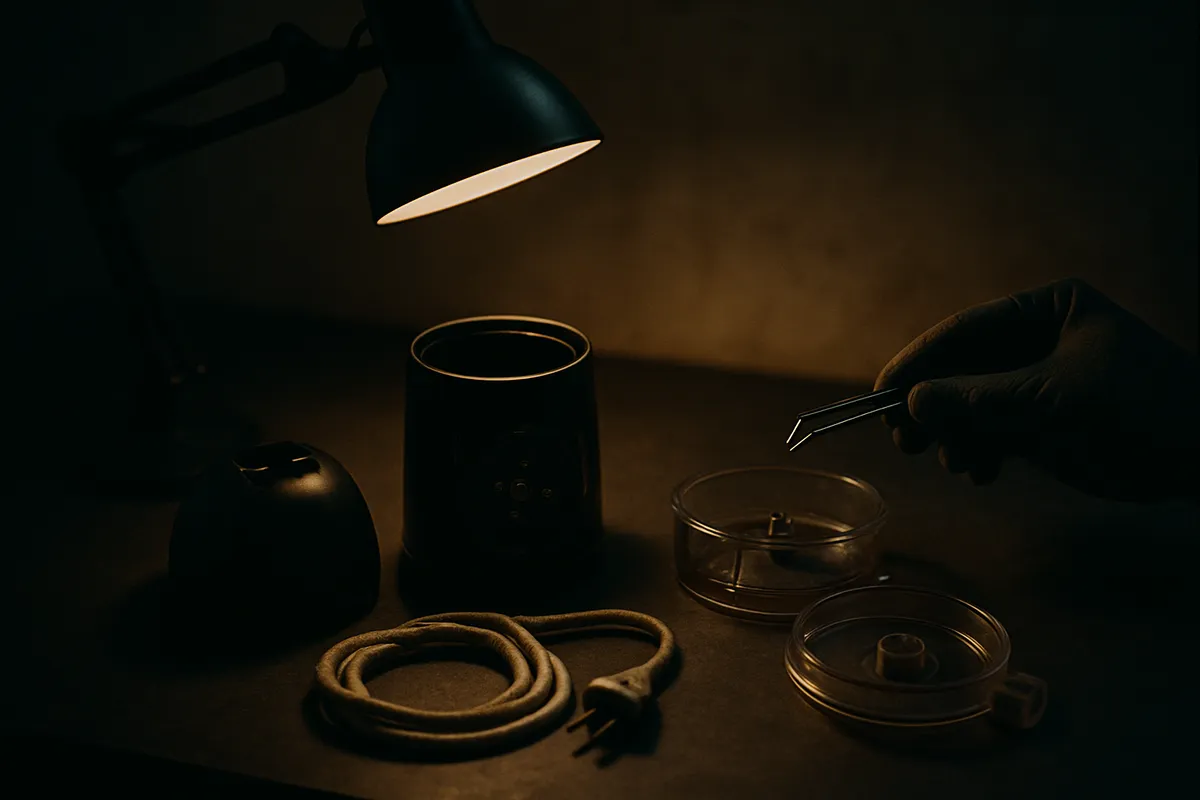
You assume the products in your home, your garage, and your car were tested and safe. Most are. But when a defective airbag, appliance, tool, or battery injures you, California gives you one of the strongest legal doctrines in the country — strict product liability — and Los Angeles juries have never hesitated to hold manufacturers accountable. Our product liability lawyers put that doctrine to work for injured consumers across LA County and the Inland Empire.
California Invented Strict Product Liability
In Greenman v. Yuba Power Products (1963), the California Supreme Court held that a manufacturer is strictly liable when a product it placed on the market proves defective and injures a person. That rule — born in California and later adopted nationwide — means:
- You do not have to prove negligence. Whether the manufacturer was careful is irrelevant; what matters is whether the product was defective.
- Everyone in the chain of distribution can be liable — manufacturer, component supplier, distributor, and retailer.
- Foreseeable use is protected, even use that isn’t strictly by-the-book.
For injured consumers, this levels a very uneven playing field. You don’t need access to the company’s internal engineering files to open your case — the defect itself speaks.
The Three Types of Product Defects
California recognizes three distinct paths to liability, and identifying the right one shapes the entire case:
1. Design defects. The product is dangerous as designed — every unit is flawed. Think of an SUV prone to rollover, a space heater without a tip-over shutoff, or a power tool with an unguarded blade. California tests design defects under the consumer expectations test and the risk-benefit test, and a plaintiff can prevail under either.
2. Manufacturing defects. The design was fine, but your unit left the factory wrong — a cracked weld, contaminated medication, a tire with separated plies. Your product differed from the manufacturer’s own specifications, and that difference hurt you.
3. Warning defects (failure to warn). The product carried hidden dangers the maker knew or should have known about, but the warnings or instructions didn’t adequately convey them. Missing dosage warnings, absent electrocution cautions, and inadequate chemical hazard labels all fall here.
The Products That Hurt People in Los Angeles
Auto defects. Defective airbags that explode or fail to deploy, tires that delaminate at freeway speed, faulty seatbacks, and ignition or braking failures turn survivable collisions into tragedies. Many of our car accident investigations uncover a product defect hiding behind an apparent driver error — which is exactly why vehicles should be preserved, not scrapped, after a serious crash.
Household and consumer products. The Consumer Product Safety Commission’s national injury surveillance system (NEISS) estimates well over 10 million consumer product-related injuries are treated in U.S. emergency rooms each year. Lithium-ion batteries and e-bikes, space heaters, pressure cookers, furniture that tips onto children, and defective power tools appear in those numbers again and again. When defective products ignite or explode, the resulting burn injuries are often catastrophic; when they cause head trauma, we pursue them through our brain injury practice. The worst failures take lives, and we stand with those families in wrongful death claims.
Preserve the Product — Your Case Depends on It
In a product case, the product is the case. Our first instruction to every client is the same:
- Keep the product, in its post-incident condition. Do not repair it, clean it, or disassemble it.
- Keep the packaging, manuals, and receipts — they establish the model, batch, and chain of sale.
- Do not return it to the store or hand it to an insurance adjuster. “We’ll take it for inspection” too often ends with lost or destroyed evidence.
- Photograph everything: the product, the scene, and your injuries, from every angle.
We then retain engineering experts, arrange jointly noticed inspections so no spoliation argument can be raised, and research recalls, CPSC reports, and prior lawsuits involving the same product line.
A Former Insurance Defense Attorney, Now on Your Side
Product manufacturers and their insurers defend these cases hard — founder Tamar Miot knows, because she used to be one of the defense attorneys they hired. Today that experience benefits injured consumers. Our results include a $5 million wrongful death recovery, a $3.85 million truck accident recovery, and a $1.1 million car accident recovery; past results don’t guarantee future outcomes.
Most product claims must be filed within two years (CCP § 335.1), but evidence preservation can’t wait a week. Explore our other practice areas or contact us today: the consultation is free and there’s no fee unless we win. Call (888) 843-5290 or reach Miracle Law online. Hablamos Español.
Frequently Asked Questions
Do I have to prove the manufacturer was negligent?
No. Since the California Supreme Court's landmark decision in Greenman v. Yuba Power Products (1963), manufacturers are strictly liable when a defective product injures a consumer using it in a reasonably foreseeable way. You must prove the defect and the injury — not carelessness.
Who can be sued in a product liability case?
Potentially everyone in the chain of distribution: the manufacturer, component makers, the distributor, and the retailer that sold the product. This matters when a foreign manufacturer is hard to reach — a California retailer may still be strictly liable.
What should I do with the product that injured me?
Keep it, exactly as it is. Don't repair it, return it for a refund, or let an insurance company 'inspect and dispose' of it. Store it somewhere safe, photograph everything including packaging and receipts, and let your attorney arrange a proper expert inspection with all parties on notice.
Is the manufacturer off the hook if I was using the product imperfectly?
Not necessarily. Manufacturers are liable for injuries arising from reasonably foreseeable use — which includes some foreseeable misuse. And under California's pure comparative negligence rule, even shared fault reduces rather than eliminates your recovery.
How long do I have to file a defective product claim in California?
Generally two years from the injury under CCP § 335.1. But the practical deadline is much shorter: the product, packaging, purchase records, and recall evidence need to be preserved immediately.
Injured? Talk to a former insurance defense attorney — free.
No fee unless we win. We'll call you back within 10 minutes. Hablamos Español.
Call (888) 843-5290Find Out If You Have a Case
Free case review. We'll call you back within 10 minutes.