
How Weather Conditions Affect Liability in California Car Accidents

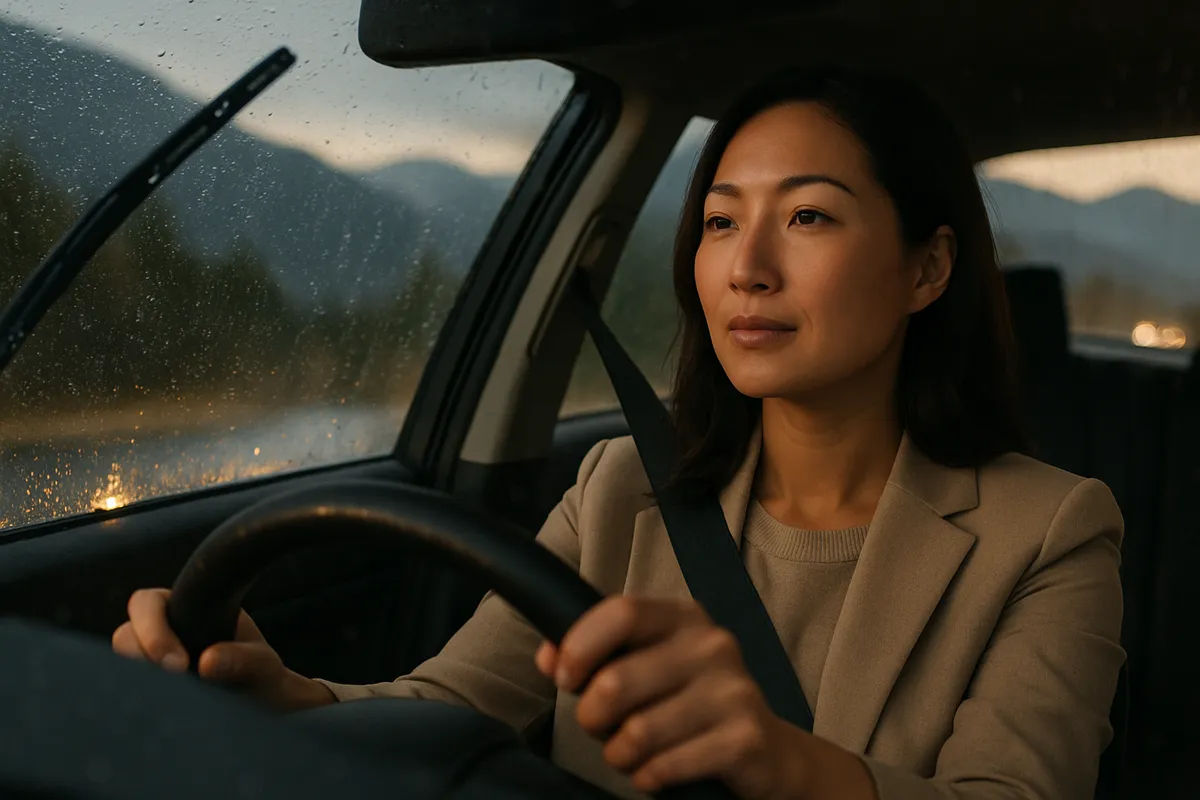
Weather-related car wrecks kill more Americans each year than lightning, hurricanes, tornadoes, and floods combined. According to the Federal Highway Administration, roughly 21% of all U.S. vehicle crashes are weather-related — nearly 5,000 deaths and more than 418,000 injuries in a typical year. But here’s the legal reality that surprises many injured Californians: how weather conditions affect liability in California car accidents has far less to do with the storm and far more to do with the driver. Rain, fog, and ice are not “acts of God” that erase fault. Drivers are legally required to adjust to conditions — and when they don’t, they’re liable for the harm that follows.
California Weather Is Getting More Extreme — and Roads More Dangerous
The state’s own Climate Adaptation Strategy documents observable shifts in the frequency and severity of extreme weather events: atmospheric-river rainstorms, flooding, wildfires that leave slick debris on roadways, and heavier mountain snow. The 2022–23 winter alone dropped more than 50 feet of snow on parts of the Sierra Nevada — among the snowiest seasons on record. When freezing conditions reach California roads, the danger compounds, because most California motorists have little experience driving on ice.
None of this changes the legal standard. It raises it. The more hazardous the conditions, the more caution a “reasonable driver” must exercise.
The Basic Speed Law: Posted Limits Only Apply in Perfect Conditions
The cornerstone of weather liability is California Vehicle Code § 22350, the basic speed law: no person may drive faster than is reasonable or prudent given the weather, visibility, traffic, and road surface. In practice:
- In heavy rain, dense fog, or high winds, the legal maximum speed drops below the posted number — and drivers are expected to use judgment about how far.
- You can be cited for driving the posted limit when conditions make it unsafe, and reckless driving charges are possible for worse.
- In a civil case, evidence that a driver failed to slow down for conditions is often the breach of duty that establishes negligence in a California car accident claim.
Headlights, Brake Lights, and Visibility Failures
California law requires headlights whenever windshield wipers are in continuous use — not just at night. A vehicle running dark in heavy rain or fog is effectively invisible to other drivers, pedestrians, and cyclists until it’s too late, and the violation carries a fine that pales next to its real cost: serious collisions. Failing to illuminate is straightforward evidence of negligence, and the same logic extends to non-functioning brake lights that fail to warn following traffic of a sudden slowdown.
Truckers Face a Higher Bar in Bad Weather
Commercial trucks are uniquely dangerous in adverse weather. A loaded semi already needs far more stopping distance than a passenger car; on wet or icy pavement that distance stretches dramatically. High winds add rollover risk — a trailer acts like a sail, and gusts genuinely can push an 18-wheeler off the road or onto its side.
Federal safety regulations require commercial drivers to exercise extreme caution in hazardous conditions and to stop when conditions become sufficiently dangerous, and truckers are protected from being fired for refusing to drive in unsafe weather. So when a truck accident happens in a storm, the liability questions multiply: Did the driver slow down? Did the carrier pressure the driver to meet a delivery window regardless of conditions? Hours-of-service logs, dispatch communications, and onboard telematics often answer those questions — if an attorney acts quickly to preserve them.
Sometimes the Only Reasonable Choice Is to Pull Over
In genuinely severe weather — flash flooding, whiteout fog, destructive winds — the reasonable-driver standard can require getting off the road entirely. Drivers who press on through conditions no prudent person would drive in take on liability for the consequences.
That cuts both ways. If you were driving during the same storm, expect the other side’s insurer to argue you should have pulled over too. This is where California’s pure comparative negligence rule (Li v. Yellow Cab Co., 1975) protects injured people: partial fault reduces your recovery by your percentage, but never eliminates it. Insurers routinely exaggerate a claimant’s share of weather-related blame, which is one more version of the fault-shifting we describe in how insurance companies determine liability.
Building a Weather-Crash Case
Weather cases are evidence cases. What wins them: certified weather data for the exact time and location, scene photos showing standing water or visibility, the police report’s roadway-condition codes, witness accounts of the defendant’s speed, and — increasingly — dashcam footage. Two deadlines govern everything: the two-year statute of limitations for injury claims (CCP § 335.1), and the six-month government claim deadline when a public entity’s road design or maintenance (clogged drains, missing signage) contributed to the crash.
Injured in a Bad-Weather Crash? Get a Free Case Review
Miracle Law founder Tamar Miot is a former insurance defense attorney — she has seen every version of the “it was just the weather” defense and knows how to dismantle it with evidence. Whether you were hurt in the rain in Rancho Cucamonga or lost a loved one in a storm-related crash anywhere in Southern California, contact us for a free consultation. No fee unless we win. Call (888) 843-5290.
Frequently Asked Questions
Can a driver blame the weather to avoid liability for a California crash?
Rarely. California law expects reasonable drivers to adjust to conditions — slowing down, increasing following distance, using headlights, or pulling over entirely. A driver who crashes because they drove normally in abnormal conditions was, by definition, not driving reasonably, and that failure to adjust is the negligence that creates liability.
Is it illegal to drive the posted speed limit in bad weather?
It can be. Vehicle Code § 22350, the basic speed law, prohibits driving faster than is safe for current conditions regardless of the posted limit. Officers can and do cite drivers for traveling the posted speed in heavy rain or fog, and that citation is powerful evidence of negligence in a civil claim.
Who is liable when a truck jackknifes or rolls over in high winds or rain?
Often the trucker and the trucking company. Commercial drivers need longer stopping distances and are trained to reduce speed or pull over in adverse weather; federal regulations require extreme caution in hazardous conditions. If a carrier pressured a driver to keep moving through a storm, the company itself may share liability.
What if I was partly at fault for driving during a storm?
You can still recover compensation. California's pure comparative negligence rule (Li v. Yellow Cab Co., 1975) reduces your award by your percentage of fault but never bars recovery entirely. If a jury finds you 20% responsible on a $200,000 claim, you still recover $160,000.
Injured? Talk to a former insurance defense attorney — free.
No fee unless we win. We'll call you back within 10 minutes. Hablamos Español.
Call (888) 843-5290Find Out If You Have a Case
Free case review. We'll call you back within 10 minutes.