
I Was Struck by a Car, But I Was Not in a Crosswalk: What Now?

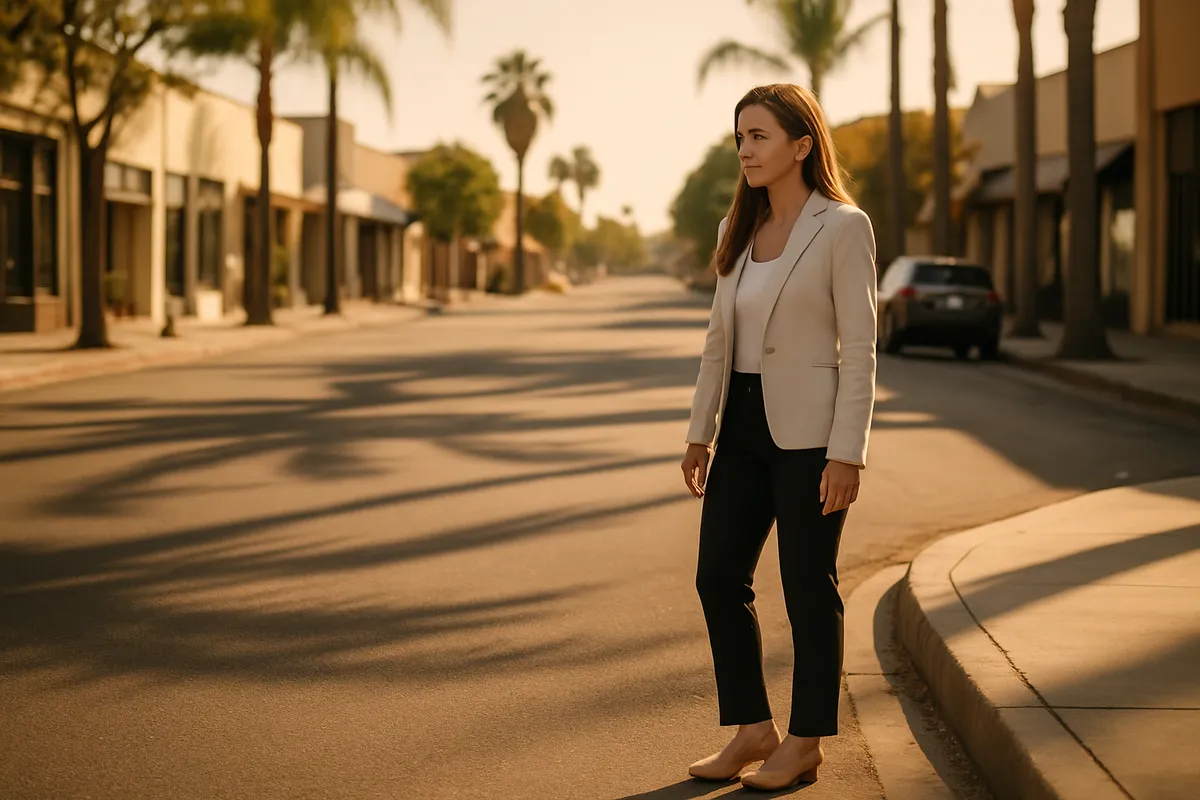
Pedestrian accidents are painfully common in California — the California Office of Traffic Safety recorded 1,106 pedestrian deaths statewide in 2023, more than any other state. And many of those collisions happen exactly where you’d expect insurers to point fingers: outside marked crosswalks. If you were struck by a car but you were not in a crosswalk, the insurance company will almost certainly argue the crash was your fault. Here’s why that argument is far weaker than it sounds — and what California law actually says about your right to compensation.
You’re Not Alone — and You’re Not Automatically at Fault
Nationally, the Governors Highway Safety Association reported roughly 7,300 pedestrian deaths in 2023, and NHTSA data consistently shows that most pedestrian fatalities occur away from intersections. In other words, non-crosswalk collisions aren’t the rare, reckless outlier — they’re the majority pattern. California law has evolved to reflect that reality.
The Freedom to Walk Act Changed the Jaywalking Equation
Under the Freedom to Walk Act (AB 2147, effective January 1, 2023), California pedestrians may cross the street outside a crosswalk or intersection without being ticketed — unless a reasonably careful person would recognize an immediate danger of collision. Jaywalking, in the old sense, has been largely decriminalized.
This matters for injury claims in two ways:
- No automatic violation, no automatic fault. Before the law changed, defense lawyers leaned on the jaywalking infraction as built-in evidence of pedestrian negligence. That presumption is gone for safe crossings.
- The driver’s duty never went away. Under Vehicle Code § 21954, even when a pedestrian yields the right-of-way outside a crosswalk, drivers must still exercise due care for pedestrians on the roadway. A driver is never entitled to hit someone simply because they were mid-block.
The honest caveat: the Act does not license stepping into the path of oncoming traffic. Crossing when a collision risk is immediate can still be cited — and will still be used against you in a civil claim. The hard cases live in between: you cross an apparently empty street, and a car appears at extreme speed. Those cases turn on evidence, not labels.
Pure Comparative Negligence: Partial Fault Reduces, Never Bars, Recovery
California follows pure comparative negligence, established in Li v. Yellow Cab Co. (1975). A jury assigns fault percentages, and your recovery is reduced by your share — with no cutoff:
- 25% at fault → you recover 75% of your damages
- 50% at fault → you recover half
- Even 75% at fault → you still recover 25%
So the real question is never “was I outside the crosswalk?” It’s “how does my conduct weigh against the driver’s?” A driver who was speeding, texting, intoxicated, or street racing typically carries the dominant share of fault regardless of where you crossed. Given that pedestrian injuries are frequently catastrophic — traumatic brain injuries, spinal damage, multiple fractures — even a reduced recovery is often the difference between financial ruin and a funded recovery.
What to Do Now
- Get complete medical care and follow through. Pedestrian impact injuries evolve; gaps in treatment become gaps in your claim.
- Preserve evidence fast. Nearby surveillance cameras, doorbell cams, and dashcams routinely overwrite footage within days. Photos of the scene, the vehicle, skid marks, and lighting conditions all matter.
- Identify witnesses. Independent accounts of the driver’s speed and attention are gold in comparative-fault fights.
- Say little to insurers. The at-fault driver’s adjuster will call quickly, hoping you’ll accept blame (“I wasn’t in the crosswalk, so…”) on a recorded line. Decline and get counsel — the playbook is the same one used in every car accident claim.
- Mind the deadlines. Two years to file suit (CCP § 335.1); six months for claims against government entities.
How Fault Actually Gets Fought
These cases are reconstructions. Attorneys use the point of impact, throw distance, vehicle damage, and video to establish the driver’s real speed; phone records to prove distraction; and lighting and sightline analysis to show the driver had time to see and avoid you. That evidence — not the crosswalk lines — determines the percentages. Our firm’s pedestrian and injury practice is built around winning exactly this fight.
Hit by a Car Outside a Crosswalk? Talk to Us Free
Miracle Law founder Tamar Miot spent years defending insurance companies before switching sides — she knows the “blame the pedestrian” strategy from the inside, and how to beat it. Don’t let an adjuster convince you that being outside a crosswalk ended your case; it didn’t. Contact us for a free consultation. No fee unless we win. Call (888) 843-5290.
Frequently Asked Questions
Can I still sue if I was jaywalking when a car hit me?
Yes. Since the Freedom to Walk Act took effect in 2023, crossing outside a crosswalk is not even an infraction unless there was an immediate danger of collision — and it has never automatically barred an injury claim. Under pure comparative negligence, your crossing location is just one factor weighed against the driver's conduct.
How does comparative negligence work for pedestrians in California?
A jury assigns each party a percentage of fault, and your compensation is reduced by your share. If you're found 25% at fault for crossing mid-block but the speeding driver is 75% at fault, you recover 75% of your damages. Even a pedestrian found mostly at fault can still recover a reduced amount.
What evidence matters most after a pedestrian accident outside a crosswalk?
Anything establishing the driver's speed, attention, and sightlines: surveillance and dashcam video, skid marks, the point of impact, phone records showing distraction, and witness accounts. Because insurers reflexively blame the pedestrian, independent evidence of the driver's negligence is usually the deciding factor.
How long do I have to file a pedestrian injury claim in California?
Generally two years from the date of the crash under CCP § 335.1. If a government entity is involved — a city vehicle, or a dangerous roadway design — you may have only six months to present an administrative claim, so speak with an attorney quickly.
Injured? Talk to a former insurance defense attorney — free.
No fee unless we win. We'll call you back within 10 minutes. Hablamos Español.
Call (888) 843-5290Find Out If You Have a Case
Free case review. We'll call you back within 10 minutes.