
Why Pedestrian Accidents Are at a 30-Year High Across the U.S.

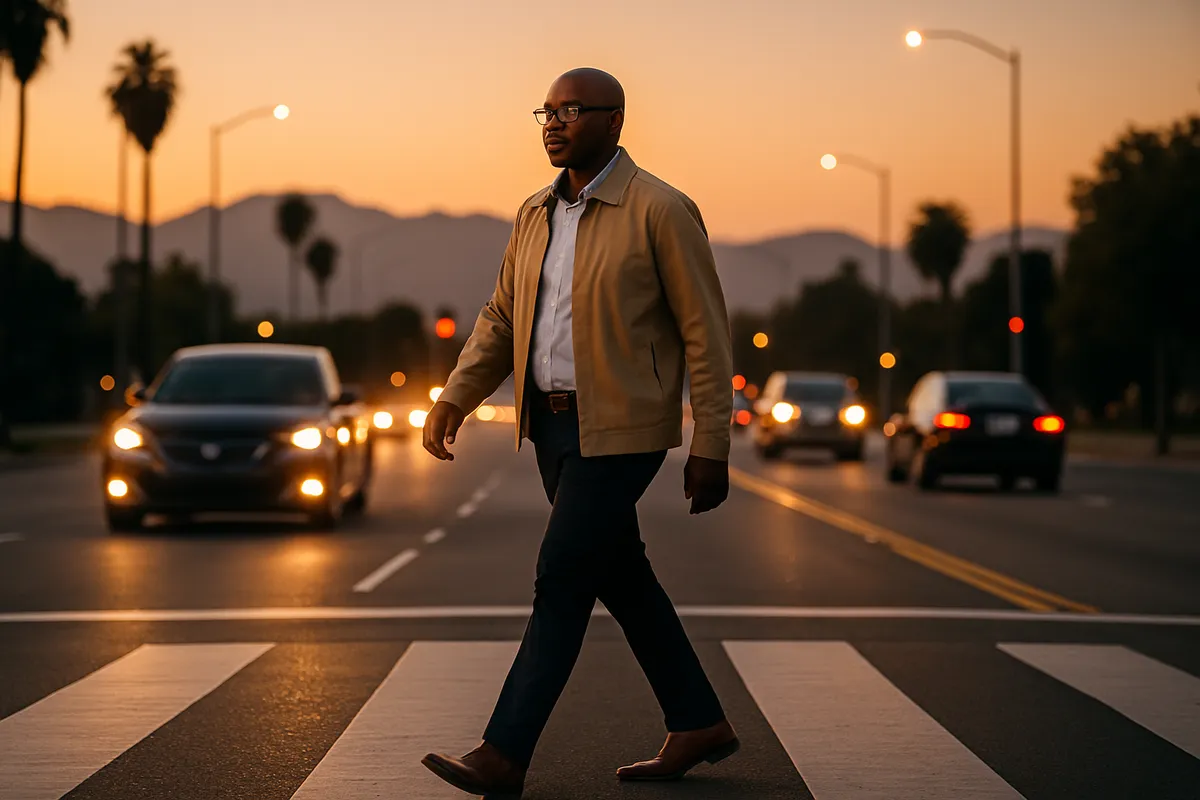
Some of the most catastrophic injuries and heartbreaking wrongful deaths we see involve people on foot. When pedestrian accidents reached a 30-year high across the U.S., the National Highway Traffic Safety Administration counted more than 6,200 pedestrians killed in a single year — roughly 17% of all traffic deaths, the worst toll in three decades. The alarming part: that record didn’t hold. Deaths kept climbing, reaching 7,522 in 2022 — the highest figure since 1981, according to the Governors Highway Safety Association. Even after two consecutive years of modest declines, GHSA’s preliminary data shows 7,148 pedestrians were killed in 2024, still nearly 20% above where the country stood in 2016.
California sits at the center of this crisis. Just five states — California, Arizona, Florida, Georgia, and Texas — have accounted for nearly half of the nation’s pedestrian deaths in peak years despite holding only about a third of the U.S. population. In 2023, 1,106 pedestrians were killed on California roads, about 27% of all the state’s traffic fatalities, per federal FARS data — meaning more than one in four Californians who die in traffic isn’t in a vehicle at all.
Why Pedestrian Deaths Are Surging
No single cause explains a multi-decade high. Safety researchers point to several forces compounding one another:
- Distracted driving. A driver looking at a phone, GPS, or infotainment screen simply cannot see a person entering a crosswalk. Distraction also produces the drifting and late braking that put people on sidewalks and shoulders at risk.
- Speed. Vehicle speed is the single biggest predictor of whether a struck pedestrian survives. Pandemic-era speeding habits on emptier roads never fully receded.
- Bigger vehicles. The American fleet has shifted heavily toward SUVs and pickups, which strike adults at chest-and-head level rather than the legs and are far deadlier to pedestrians in a collision.
- Road design and darkness. The majority of pedestrian fatalities happen at night, away from intersections, on wide multi-lane arterial roads built to move cars fast — the exact road type that dominates Southern California suburbs and the Inland Empire.
- Impairment. Alcohol and drug impairment — by drivers and sometimes pedestrians — remains a factor in a large share of fatal crashes.
California Drivers Owe Pedestrians a Duty of Care
Every motorist on a California road owes people on foot a legal duty of reasonable care. Drivers meet that duty — and prevent tragedies — by:
- Slowing down in neighborhoods, school zones, and areas with foot traffic
- Stopping for pedestrians at marked and unmarked crosswalks
- Keeping their eyes on the road and never driving distracted
- Using extra caution at night and in fog or rain
- Never driving impaired
When a driver breaches that duty and hits someone, the driver (and their insurer) is liable for the resulting harm. Given the physics involved, that harm is often severe: traumatic brain injuries, spinal cord damage, internal injuries, and complex fractures are the norm rather than the exception in pedestrian cases, and the worst crashes become wrongful death claims brought by surviving family members.
What Injured Pedestrians (and Families) Should Know
Partial fault does not bar your claim. California follows pure comparative negligence (Li v. Yellow Cab Co., 1975). If an insurer argues you crossed mid-block or wore dark clothing, that may reduce your percentage of recovery — it does not eliminate it. Insurers routinely exaggerate pedestrian fault precisely because they know many victims will simply accept the blame and go away.
Evidence disappears fast. Traffic and doorbell camera footage, vehicle event data, skid marks, and witness memories all degrade within days or weeks. The same investigative playbook that wins car accident cases — preservation letters, scene documentation, reconstruction experts — matters even more when the victim was on foot and the driver claims they “came out of nowhere.”
Deadlines are unforgiving. You generally have two years to file suit (CCP § 335.1). If a dangerous public roadway, crosswalk, or signal contributed to the crash, a claim against the responsible government entity must typically be filed within six months.
Multiple sources of recovery may exist. Beyond the driver’s liability policy, your own uninsured/underinsured motorist coverage can apply to you as a pedestrian — a fact many victims never learn until they talk to a lawyer. Hit-and-run victims in particular often assume they have no claim when their own auto policy may cover them fully. Depending on the facts, employers of on-the-job drivers and even government entities responsible for dangerous road designs can also share liability.
What Pedestrians Can Do to Stay Safer
Pedestrians usually have the right of way, but the laws of physics don’t care who was right. Cross at crosswalks or intersections where possible, look in all directions — including for turning vehicles — obey signals, use sidewalks or walk facing traffic where there are none, stay visible at night, and watch for cars pulling out of driveways and parking lots. None of this shifts the driver’s duty of care; it just improves your odds of getting home.
Hit by a Negligent Driver? We Want to Hear Your Story
Miracle Law represents injured pedestrians and grieving families across Los Angeles, Riverside, and the Inland Empire, including Rancho Cucamonga. Founder Tamar Miot is a former insurance defense attorney — she knows exactly how insurers build the “the pedestrian was careless” defense, and how to dismantle it. The consultation is free and there’s no fee unless we win. Contact us or call (888) 843-5290 today.
Frequently Asked Questions
Why are pedestrian deaths so high in the United States?
Safety experts point to a convergence of factors: smartphone-distracted driving, higher speeds, the shift toward taller and heavier SUVs and pickups that strike pedestrians at chest level, and road designs that prioritize fast vehicle traffic. Most pedestrian deaths happen after dark and away from intersections on multi-lane arterial roads.
Do pedestrians always have the right of way in California?
No — but drivers always owe pedestrians a duty of care. Drivers must yield to pedestrians in marked and unmarked crosswalks at intersections, and even a jaywalking pedestrian doesn't forfeit the right to recover. Under California's pure comparative negligence rule, a pedestrian found partly at fault can still recover damages, reduced by their share of responsibility.
What compensation can an injured pedestrian recover?
Compensation can include medical bills, future care, lost income and earning capacity, and pain and suffering. Because an unprotected human body absorbs the full force of a vehicle, pedestrian cases often involve catastrophic injuries — brain trauma, spinal injuries, and fractures — and in fatal cases, families can pursue a wrongful death claim.
How long do I have to file a pedestrian accident claim in California?
Generally two years from the date of the crash under Code of Civil Procedure § 335.1. If a government entity is potentially responsible — for example, a dangerous crosswalk design or missing signals — you may have only six months to file an administrative claim, so it's important to get legal advice quickly.
Injured? Talk to a former insurance defense attorney — free.
No fee unless we win. We'll call you back within 10 minutes. Hablamos Español.
Call (888) 843-5290Find Out If You Have a Case
Free case review. We'll call you back within 10 minutes.