
YouTube Video of LA Waymo Striking Sedan Raises Questions About Liability

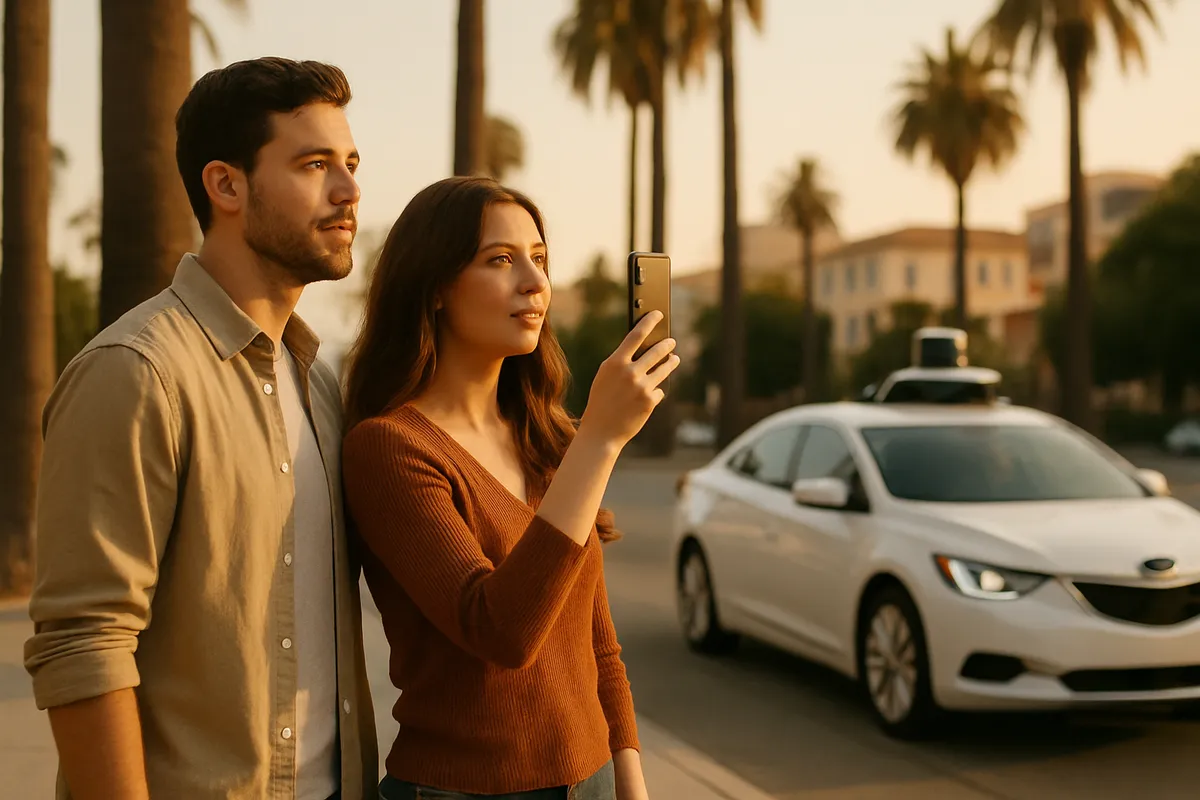
Video footage published by a UK outlet and circulated on YouTube showed a Waymo robotaxi striking a sedan on a Los Angeles street, leaving both vehicles with visible damage. Fault in the collision was still being examined, but the clip spread quickly — because it captures a question millions of Angelenos now share the road with: when a driverless car causes a crash, who is actually liable? This LA Waymo collision video has become part of a much larger conversation about safety and accountability as robotaxis expand across California.
Waymo’s own published safety research claims its vehicles are involved in significantly fewer injury-causing crashes per mile than human drivers. Federal regulators have nonetheless taken a close look: the National Highway Traffic Safety Administration opened an investigation into Waymo’s automated driving system in 2024 after a series of reported incidents involving collisions and possible traffic-law violations. Whatever the fleet-wide statistics say, individual crashes still happen — and the people injured in them need answers that fleet averages can’t provide.
Why a Driverless Car Crash Isn’t a Normal Car Accident Claim
In a typical two-car collision, the liability question is straightforward: which driver breached their duty of care? Remove the driver, and the question splinters. Depending on what the evidence shows, responsibility for an autonomous vehicle crash may rest with:
- The AV operator (Waymo). If the driving system failed to detect a hazard, misread a traffic situation, or responded unsafely, the company that designed and deployed it may be liable — under negligence theories, product liability theories, or both.
- Vehicle and component manufacturers. Defective sensors, cameras, brakes, or other hardware can support a product liability claim against whoever built or supplied the failing part.
- Software and technology providers. Autonomous systems layer software from multiple sources; a coding or integration failure can implicate a third-party developer.
- Other human drivers. Not every robotaxi crash is the robot’s fault. A speeding, distracted, or red-light-running human driver can be partly or wholly responsible.
California’s pure comparative negligence rule (Li v. Yellow Cab Co., 1975) governs when fault is shared: each responsible party pays according to its percentage of blame, and an injured person who bears some fault can still recover, reduced by their share. In multi-defendant AV cases, that allocation fight is where much of the lawyering happens.
The Evidence Battle: Data the Car Recorded About Its Own Crash
Here’s the paradox of autonomous vehicle cases: the best evidence of what happened is usually recorded by the defendant’s own vehicle. Waymo vehicles continuously log sensor readings, multi-angle camera footage, speed, braking, and the system’s real-time decisions. That data can show precisely whether the car detected the sedan, when it reacted, and whether it responded the way a safe system should.
But the data sits on corporate servers, and injured people have no automatic access to it. That’s why the early moves matter so much:
- Preservation letters demanding the company retain all vehicle data, footage, and maintenance records from the incident
- Independent evidence — third-party surveillance and dashcam video, witness statements, and the police report — that doesn’t depend on the defendant’s cooperation
- Expert analysis from accident reconstructionists and, in serious cases, engineers who can interpret system logs
The same principle applies in ordinary crashes — video footage and physical evidence win cases — but in AV litigation it’s amplified, because the technical record often is the case.
What This Means for Injury Victims
If you’re hurt in a collision involving a Waymo or any autonomous vehicle in Los Angeles, your fundamental rights don’t change — but the practical path does:
- Get medical care immediately and follow through with treatment, exactly as you would after any serious crash. Your health comes first, and prompt records tie your injuries to the collision.
- Document the scene, including the vehicle’s identifying information and anything unusual you observed about its behavior before impact.
- Report the crash to police so an official record exists. California requires AV companies to report collisions to regulators as well — the DMV permits autonomous operation on public roads, and the CPUC authorizes driverless passenger service, so a regulatory paper trail may exist.
- Don’t negotiate alone. These claims put you across the table from a major technology company and its insurers, with corporate defense teams experienced at deflecting blame. Coverage questions can be layered, much like complex insurance claims in rideshare cases.
- Mind the deadline. California generally allows two years from the date of injury to file suit (CCP § 335.1) — and far less time than that to preserve the digital evidence.
The law here is still evolving. Legislators and courts are actively working out how traditional negligence and product liability doctrines apply to machines that drive. Victims benefit from attorneys who treat that uncertainty as leverage rather than an obstacle — identifying every viable theory and every responsible party instead of accepting a technology company’s version of events.
Hit by an Autonomous or Rideshare Vehicle? Talk to Us — Free
Miracle Law represents crash victims throughout Los Angeles and the Inland Empire, and we’re closely watching how autonomous vehicle liability develops on California roads. Founder Tamar Miot is a former insurance defense attorney — she knows how corporate insurers evaluate, delay, and defend these claims, because she used to sit on that side of the table. The consultation is free and there’s no fee unless we win. Contact us or call (888) 843-5290 today.
Frequently Asked Questions
Who is liable when a Waymo hits another car in California?
It depends on what caused the crash. If the autonomous system failed to detect or respond to a hazard, liability may rest with Waymo and potentially component manufacturers or software providers under negligence or product liability theories. If another driver's behavior caused the collision, that driver may bear fault. Many autonomous vehicle cases involve shared responsibility divided among several parties under California's comparative fault rules.
Can I sue if I was injured by a driverless car?
Yes. Being struck by an autonomous vehicle doesn't limit your rights — if anything, claims may reach deeper-pocketed corporate defendants than a typical crash. You can pursue compensation for medical expenses, lost income, vehicle damage, and pain and suffering, generally within two years under California Code of Civil Procedure § 335.1.
What evidence matters most in an autonomous vehicle accident case?
The vehicle's own data: sensor logs, camera footage, speed and braking records, and system-decision data showing what the car detected and how it responded. Third-party video, witness statements, and the police report matter too. Because this data sits in corporate hands, attorneys send preservation demands early so it can't be lost or overwritten.
Are robotaxis regulated in California?
Yes. The California DMV permits autonomous vehicle testing and deployment on public roads, and the CPUC authorizes driverless passenger service. Companies must carry substantial insurance and report collisions involving their autonomous vehicles, which creates a regulatory paper trail that can support injury claims.
Injured? Talk to a former insurance defense attorney — free.
No fee unless we win. We'll call you back within 10 minutes. Hablamos Español.
Call (888) 843-5290Find Out If You Have a Case
Free case review. We'll call you back within 10 minutes.