
Newsom Orders CA State Workers to Return to Office: LA Workers Argue About Traffic Concerns

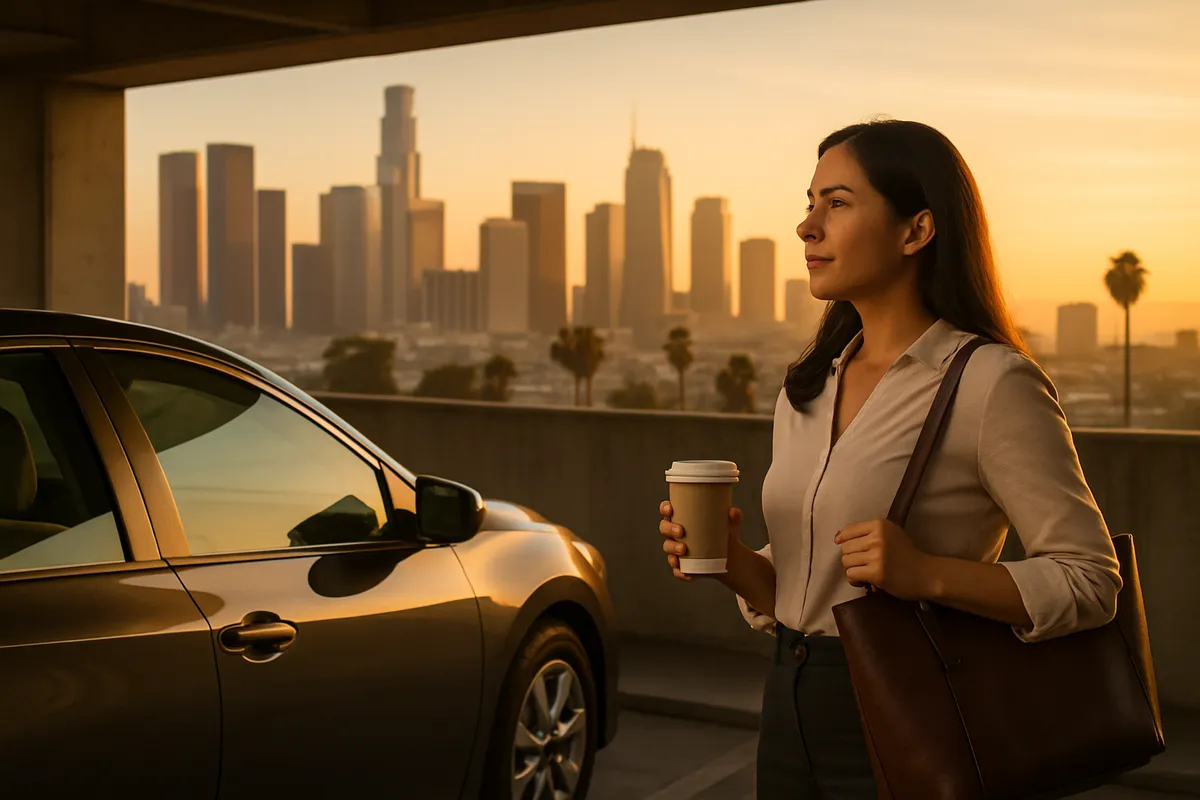
California Gov. Gavin Newsom’s order requiring many state employees to return to in-person work has prompted pushback from Los Angeles workers, who argue that renewed commuting will worsen traffic congestion and environmental impacts, according to Straight Arrow News. Opponents point to longer travel times, higher transportation costs, and thousands of additional vehicles funneling onto already-jammed regional freeways.
Beneath the policy debate sits a practical concern for everyone who drives in LA: more commuters means more crashes. Whatever your view of the return-to-office order, the collision math is worth understanding — along with your legal rights if a rush-hour crash leaves you injured.
The Return-to-Office Order and the Traffic Argument
The order requires many state employees to resume in-person work, ending or curtailing remote arrangements adopted in recent years. For LA-area state workers, the objections are concrete: the region’s commutes are among the longest in the country, and each returning commuter adds a vehicle to peak-hour flows on the 5, 10, 101, 110, and 405.
Workers raising traffic concerns aren’t just complaining about lost time. Congestion changes the kind of driving everyone does — more stop-and-go, more sudden braking, more merging conflict, more frustration-driven lane changes. Those are precisely the conditions that produce collisions.
More Commuters, More Crashes: What the Data Shows
California’s roads remain dangerous even in improving years. The California Office of Traffic Safety reported 4,061 traffic fatalities statewide in 2023 — down from 4,539 in 2022, but still more than 11 deaths per day, with Los Angeles County consistently accounting for the largest share of any county.
Congested commuting hours concentrate specific crash types:
- Rear-end collisions, which NHTSA data has long shown make up roughly a third of all crashes, thrive in stop-and-go traffic where following distances collapse.
- Chain-reaction, multi-vehicle crashes, where one impact shoves vehicles into each other down a lane of packed traffic.
- Distraction-involved crashes — NHTSA attributes more than 3,000 deaths a year nationally to distracted driving, and slow commutes tempt drivers to reach for their phones.
- Merging and lane-change collisions at ramps and interchanges, where impatient drivers force gaps that don’t exist.
We recently covered a fatal example of how dangerous LA-area freeway corridors can be in our post on a deadly Burbank freeway crash.
Fault in a Commuter Crash: How California Law Sorts It Out
California is an at-fault state: the driver (or drivers) whose negligence caused the crash pays for the harm, usually through their insurer. In rush-hour collisions, three principles do most of the work:
- Following distance. A driver who rear-ends you was almost always following too closely for conditions — the core negligence theory in most congestion crashes.
- Comparative negligence. Under California’s pure comparative negligence rule (Li v. Yellow Cab Co., 1975), fault is allocated by percentage among everyone who contributed, and your recovery is reduced — never eliminated — by your share. In a five-car chain reaction, that allocation is where the real fight happens.
- Employer liability. If the at-fault driver was working at the time — a delivery driver, a state employee in a fleet vehicle, anyone driving within the scope of their job — their employer may be liable too, which often means a larger insurance policy. Note that crashes involving government vehicles or dangerous public road conditions trigger California’s six-month government claim deadline, far shorter than the general two-year statute of limitations (CCP § 335.1).
And a wrinkle for returning state workers themselves: the “going and coming” rule generally keeps the ordinary home-to-office commute outside workers’ compensation, but travel between work sites or on work errands can be covered — a distinction worth reviewing with an attorney rather than assuming.
Protecting Yourself — Physically and Legally — as Commutes Return
Defensive habits reduce your risk: leave real following distance, avoid the phone entirely, expect sudden stops near ramps, and build slack into your schedule so you’re not driving frustrated.
If a crash happens anyway, the first hours matter. Get medical care even if you feel fine — adrenaline masks injuries like whiplash, concussions, and soft-tissue damage that often surface a day or two later, and gaps in treatment become insurer talking points down the road. Follow every treatment recommendation and keep records of appointments, prescriptions, and missed work; that paper trail is what converts a real injury into a provable claim. Photograph everything, collect witness contacts, and request the CHP or LAPD report. Then let a lawyer deal with the insurance companies: multi-vehicle commuter crashes generate competing adjuster narratives about fault, and early recorded statements are routinely mined for admissions. Dashcam, traffic camera, and nearby surveillance footage — often the decisive evidence in a disputed rush-hour crash — can be overwritten within days unless someone acts to preserve it.
Our Los Angeles car accident attorneys handle exactly these investigations, from evidence preservation through settlement or trial.
Talk to a Former Insurance Defense Attorney — Free
If the return-to-office era puts you back on LA’s freeways and a negligent driver puts you in the hospital, you don’t have to face the insurance process alone. Miracle Law’s founder, Tamar Miot, is a former insurance defense attorney who knows precisely how carriers minimize commuter crash claims — and how to counter them. Contact us for a free consultation. There is no fee unless we win. Call (888) 843-5290.
Frequently Asked Questions
If I'm injured in a crash while commuting, is my employer responsible?
Usually not for the ordinary drive between home and the office — California's 'going and coming' rule generally puts the commute outside workers' compensation. But there are exceptions: driving between work sites, running a work errand, or travel that is itself part of the job can bring a crash within workers' comp and sometimes employer liability. The at-fault driver remains liable in a personal injury claim either way.
Who is at fault in a rear-end crash in heavy LA traffic?
In most cases the trailing driver, who has a duty to leave enough following distance to stop safely. But chain-reaction crashes in congestion are more complicated — a middle car may be pushed into the vehicle ahead — and California's pure comparative negligence rule allocates fault by percentage among everyone whose negligence contributed.
What should I do after a rush-hour collision on an LA freeway?
Move to safety if possible and call 911, accept medical evaluation even if you feel fine, photograph the vehicles and scene, exchange information, and get witness contacts. Then speak with an attorney before giving any recorded statement to an insurer — multi-vehicle rush-hour crashes almost always involve competing insurance narratives about fault.
How long do I have to file a claim after a commuter crash?
Generally two years under CCP § 335.1 for a personal injury lawsuit. If a government vehicle or dangerous public road condition was involved — a real possibility with state employees commuting in fleet vehicles — an administrative claim may be due within six months. Evidence like traffic and dashcam footage disappears much faster.
Injured? Talk to a former insurance defense attorney — free.
No fee unless we win. We'll call you back within 10 minutes. Hablamos Español.
Call (888) 843-5290Find Out If You Have a Case
Free case review. We'll call you back within 10 minutes.