
One Killed in Burbank Freeway Crash That Closed Ramp

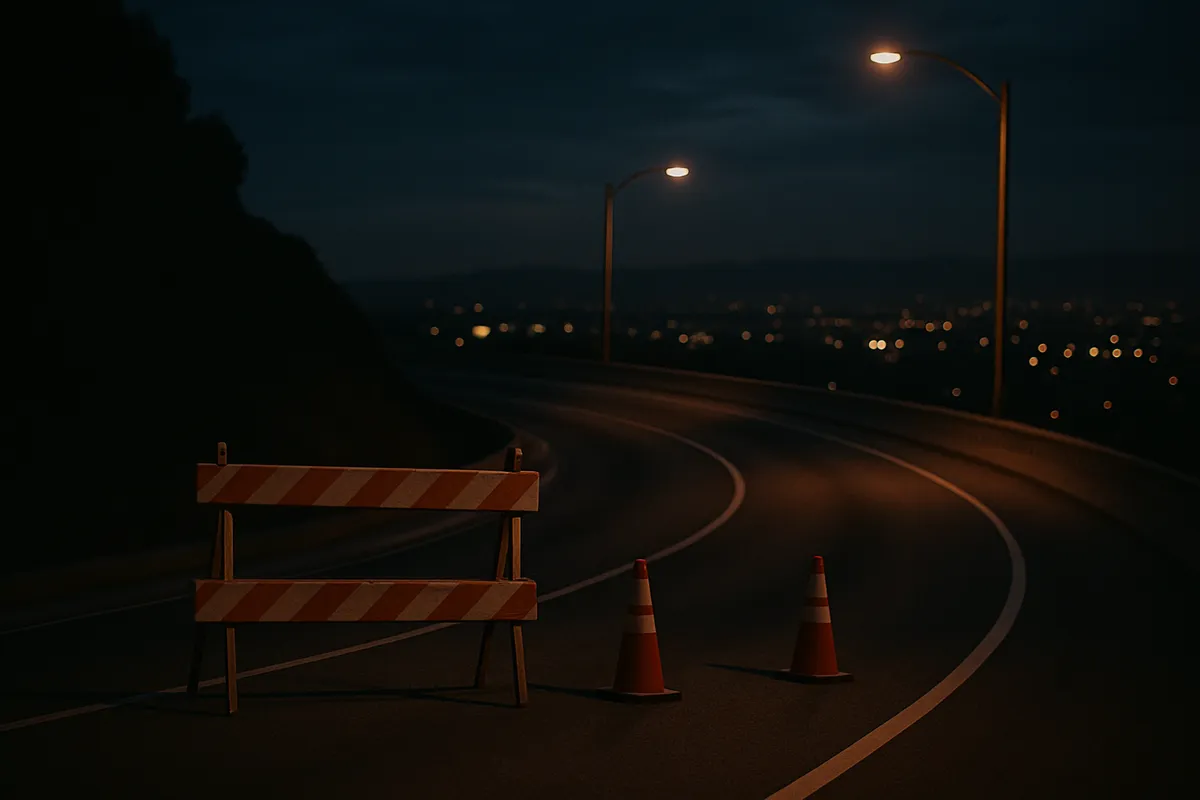
One person is dead following a Burbank freeway crash near the Empire Avenue off-ramp of the 5 Freeway, according to KTLA News. The crash was reported at 10:23 p.m. Sunday on the Empire Avenue off-ramp from the northbound Golden State Freeway, per the California Highway Patrol.
One person was pronounced dead at the scene, and a news videographer who responded reported the victim was a pedestrian. The CHP issued a SigAlert at 10:37 p.m., shutting down the off-ramp while officers investigated. The cause of the collision and the surrounding circumstances remained under active investigation as authorities gathered information from the scene.
Behind those procedural facts is a family’s sudden, devastating loss — and a set of legal questions that fatal pedestrian crashes on freeway ramps raise almost every time.
What We Know About the Burbank Crash
The confirmed details are limited but specific: a late-night crash on the northbound 5’s Empire Avenue off-ramp in Burbank, one person dead at the scene, a reported pedestrian victim, and a CHP investigation that closed the ramp. Nothing had been announced about the driver, vehicle, or cause.
That investigation will generate the record everything else builds on: the CHP crash report, scene photographs and measurements, witness identifications, and time-stamped dispatch logs. In fatal pedestrian cases, investigators typically examine vehicle speed, driver sobriety and phone activity, lighting and visibility on the ramp, and how and why a person on foot came to be there.
Nighttime and Ramps: A Lethal Combination for Pedestrians
The circumstances of this crash — a pedestrian, after 10 p.m., at a freeway ramp — track the deadliest patterns in national data. According to the National Highway Traffic Safety Administration, roughly three-quarters of pedestrian fatalities occur in dark conditions, when drivers’ perception distances collapse and reaction time runs out before a person is even visible.
The scale of the problem is national and local. The Governors Highway Safety Association counted more than 7,000 pedestrian deaths nationwide in 2023, and California consistently records among the highest pedestrian fatality counts of any state — more than 1,000 deaths in a typical recent year, per California Office of Traffic Safety data. Freeway ramps are a particular danger zone: drivers exit at highway speed while transitioning to surface streets where people on foot may foreseeably be present, and ramp environments often feature poor lighting and minimal pedestrian separation.
Who May Be Liable in a Fatal Off-Ramp Pedestrian Crash
California law approaches these cases through negligence, and the liability analysis usually runs in three directions.
The driver. California imposes a duty on every driver to exercise due care for pedestrians in all circumstances — not just at crosswalks. Speed on the ramp, distraction (cell phone records can be subpoenaed), impairment (toxicology becomes part of the record), and whether the driver had a reasonable opportunity to see and avoid the person are the core questions. Where the driver was working at the time, their employer may share liability, and a commercial policy may apply.
The roadway itself. Not every ramp fatality is purely about driver conduct. Inadequate lighting, missing signage, design that funnels pedestrians toward traffic, or a documented history of similar crashes at the same location can establish a dangerous condition of public property — a claim against Caltrans or another government entity. These claims are viable but procedurally brutal: under California’s Government Claims Act, a written claim must be presented within six months, and courts enforce that deadline strictly. Any fatal crash where roadway conditions may have contributed needs legal evaluation immediately, not after the two-year anniversary approaches.
Comparative fault. Expect the defense to argue the pedestrian should not have been on or near the ramp. Under California’s pure comparative negligence rule (Li v. Yellow Cab Co., 1975), that argument reduces a recovery by the victim’s percentage of fault — it does not erase the claim. Juries routinely assign meaningful fault to drivers even when a pedestrian was outside a crosswalk, because the driver’s speed and attention still determine whether a collision was avoidable.
What This Means for the Victim’s Family
California gives close family members a wrongful death claim — covering funeral expenses, lost financial support, and the loss of the loved one’s companionship, comfort, and guidance — along with a survival action for the estate. Building that case starts with evidence that decays fast: the CHP report and dispatch logs, ramp lighting conditions as they existed that night, surveillance and dashcam footage on short overwrite cycles, and witness memories.
Families should also be cautious with insurers. Adjusters often reach out quickly after fatal crashes, sympathetic in tone but focused on locking in statements and early, low settlements before the liability picture — including possible vehicle-related and government defendants — is fully developed. It costs nothing to have an attorney handle those conversations instead; our firm serves families throughout Burbank and greater Los Angeles across our practice areas. Rising commuter traffic makes these corridors more dangerous, not less — a dynamic we explored in our post on LA workers’ return-to-office traffic concerns.
Talk to a Former Insurance Defense Attorney — Free
Miracle Law’s founder, Tamar Miot, spent years defending insurance companies before dedicating her practice to victims and grieving families. She knows exactly how insurers build the “the pedestrian shouldn’t have been there” defense — and how to dismantle it with evidence. If you lost a loved one in the Burbank freeway crash or a similar collision, contact us for a free, compassionate consultation. There is no fee unless we win. Call (888) 843-5290.
Frequently Asked Questions
Who can be liable when a pedestrian is killed on a freeway off-ramp?
Potentially several parties. The driver may be liable for speeding, distraction, impairment, or failing to exercise due care around a foreseeable pedestrian. If the driver was working, their employer may share liability. And if ramp lighting, signage, design, or a history of similar crashes points to a dangerous roadway condition, Caltrans or another public entity may bear responsibility — subject to a strict six-month claim deadline.
Does a pedestrian being on or near a freeway bar the family's claim?
No. California's pure comparative negligence rule means a victim's own share of fault reduces the recovery by that percentage but never eliminates it. Even where a pedestrian was somewhere they arguably shouldn't have been, a driver's speed, attention, and opportunity to avoid the person remain central questions — and drivers owe a duty of due care to pedestrians in all circumstances.
What is a SigAlert and why does the CHP report matter?
A SigAlert is the CHP's public notice of an unplanned lane or roadway closure lasting 30 minutes or more — here, it closed the Empire Avenue off-ramp during the investigation. The CHP's crash report, dispatch logs, and scene documentation become foundational evidence in any later claim, recording vehicle positions, conditions, witnesses, and the investigating officers' initial assessment.
What deadlines apply to a wrongful death claim from a freeway crash?
Generally two years from the date of death under CCP § 335.1 for claims against private parties. But if roadway design, lighting, or maintenance may have contributed, a claim against Caltrans or another public entity must be presented within six months — one of the shortest and most unforgiving deadlines in California law.
Injured? Talk to a former insurance defense attorney — free.
No fee unless we win. We'll call you back within 10 minutes. Hablamos Español.
Call (888) 843-5290Find Out If You Have a Case
Free case review. We'll call you back within 10 minutes.