
Pacoima Construction Worker Crushed by Concrete Wall in Accident Identified

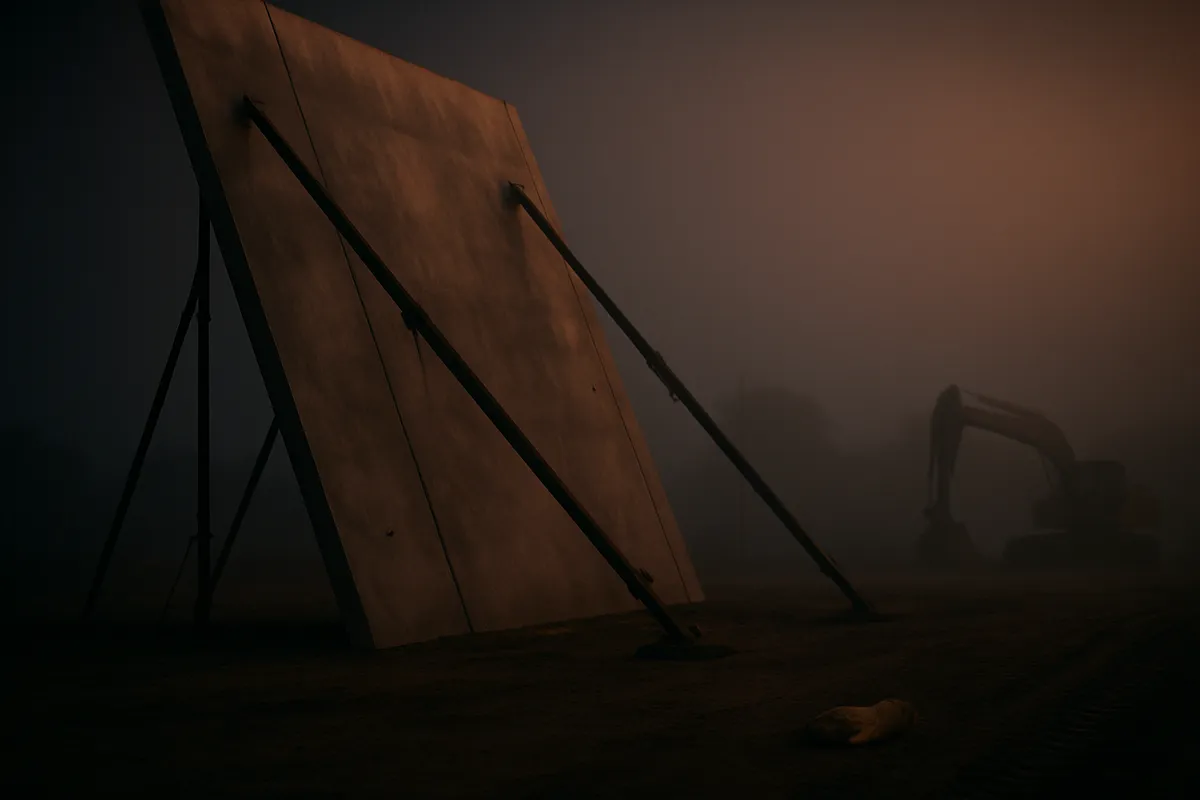
A construction worker died at a Pacoima worksite after a concrete wall collapsed onto him, authorities and family members confirmed, according to KTLA News. Relatives identified the man as a devoted grandfather of three whose presence they described as “irreplaceable.” First responders rushed to the scene, but the worker died from his injuries at the site. The Pacoima construction accident remains under investigation as officials work to determine what caused the wall to fall, while family members and coworkers mourn a man remembered for his dedication to his craft.
Beyond the grief, a fatal worksite collapse like this one raises urgent legal questions for the family left behind — about workers’ compensation death benefits, about who was responsible for site safety, and about whether anyone beyond the employer can be held accountable.
The Deadly Reality Behind Pacoima Construction Accidents
Wall and structural collapses are among the most feared events on any jobsite, and the numbers show why construction remains uniquely dangerous work. According to the U.S. Bureau of Labor Statistics, 1,075 construction workers died on the job in 2023 — the most of any industry and roughly one in five of all American workplace deaths that year. The majority of those deaths trace back to what OSHA calls the “Fatal Four”: falls, struck-by incidents, electrocutions, and caught-in/between accidents. A collapsing concrete wall is a textbook struck-by/caught-between hazard.
California is no exception. The California Department of Industrial Relations records more than 400 fatal work injuries statewide in a typical year, and Cal/OSHA opens investigations into serious and fatal incidents like this one as a matter of course.
How a Fatal Worksite Collapse Is Investigated
Construction sites change fast — debris gets cleared, structures get shored up, and crews return to work. That is why the first days after a fatal accident matter so much.
Cal/OSHA and Scene Documentation
Cal/OSHA inspectors examine whether the site complied with California’s construction safety orders: Was the wall properly braced or shored? Were engineering plans followed? Were workers trained on the hazard? Citations for violations carry real weight in any later civil claim, because they are official findings that safety rules were broken.
Engineering and Structural Analysis
In a wall collapse, structural engineers assess load, bracing, formwork, soil conditions, and whether the build deviated from approved plans. Photographs, equipment positions, pour records, and inspection logs all become evidence — but only if someone acts to preserve them. An attorney can send preservation demands so key evidence doesn’t disappear before the family’s own experts can review it.
Witness Statements
Coworkers often know whether warnings were raised, whether the crew was rushed, and whether the hazard was visible before the collapse. Independent statements taken early are far more reliable than recollections gathered months later.
Workers’ Compensation Death Benefits Are No-Fault
California’s workers’ compensation system, administered through the Division of Workers’ Compensation, is no-fault: the family does not need to prove the employer was negligent to receive benefits. When a worker is killed on the job, eligible dependents — typically a spouse, children, or other family members who relied on the worker’s income — can receive:
- Burial expenses
- Death benefit payments, with the total depending on the number of dependents, paid out over time like wage-replacement benefits
- Any medical costs incurred between the injury and the death
These benefits are vital, but they are also limited. Workers’ compensation never pays for a family’s grief, loss of companionship, or the full lifetime earnings the worker would have provided. That is where third-party claims come in.
Third-Party Liability: When the Claim Goes Beyond Workers’ Comp
Workers’ compensation is generally the exclusive remedy against the employer. But construction sites are crowded with other companies — general contractors, subcontractors, equipment suppliers, engineers, and property owners — and any of them can be sued in civil court if their negligence contributed to a collapse. Common third-party scenarios include:
- A general contractor that retained control over site safety and failed to enforce shoring or bracing requirements
- A subcontractor whose crew built, braced, or poured the wall improperly
- An equipment or materials supplier that furnished defective formwork, bracing, or concrete
- A property owner who concealed a known hazard on the site
A third-party wrongful death claim allows recovery that workers’ comp does not: the full value of lost financial support, loss of love and companionship, and funeral expenses. The two claims can proceed at the same time, though they must be coordinated carefully because the workers’ comp insurer may assert reimbursement rights against a civil recovery.
Deadlines Families Need to Know
Under California Code of Civil Procedure § 335.1, wrongful death lawsuits generally must be filed within two years of the death. Workers’ compensation death benefit claims carry their own filing deadlines, and if any public entity bears responsibility, a government claim may be due within just six months. In practice, the real deadline is evidence: worksites are rebuilt within weeks, and records can be lost or destroyed unless preservation demands go out early.
What This Means for Injury Victims and Families
The Pacoima tragedy is a reminder that construction workers bear enormous risks so the rest of Southern California can grow — and that when safety systems fail, the law gives families more than one path to accountability. If your family has been affected by a serious or fatal construction accident in Pacoima, the San Fernando Valley, or anywhere in Los Angeles County, the most important steps are to file the workers’ compensation claim promptly, preserve evidence before the site changes, and have an independent investigation identify every responsible party — not just the employer.
Talk to a Former Insurance Defense Attorney — Free
Miracle Law’s founder, Tamar Miot, spent years as an insurance defense attorney before switching sides, so she knows exactly how employers’ and contractors’ insurers work to limit what they pay grieving families. Our workers’ compensation team handles claims throughout Los Angeles County and the Inland Empire. The consultation is free, and there is no fee unless we win. Call (888) 843-5290.
Frequently Asked Questions
Can a family sue after a fatal construction accident in California, or is workers' compensation the only option?
Workers' compensation death benefits are usually the exclusive remedy against the employer, but they are not the only path. If a third party — a general contractor, subcontractor, equipment manufacturer, or property owner — contributed to the accident, the family can file a separate wrongful death lawsuit against that party and recover damages workers' comp does not cover.
What death benefits does California workers' compensation pay to surviving family members?
Eligible dependents can receive burial expenses plus ongoing death benefit payments, with the total amount depending on the number of dependents. These benefits are paid regardless of fault, through the Division of Workers' Compensation system. An attorney can help confirm eligibility and make sure the insurer pays the full amount.
Who investigates a fatal construction accident like the Pacoima wall collapse?
Cal/OSHA investigates serious and fatal workplace accidents in California, examining safety plans, training records, equipment, and structural conditions, and it can issue citations for violations. Local law enforcement and the employer's insurer typically conduct parallel investigations. Families can also retain their own attorney and experts to preserve evidence independently.
How long do families have to act after a fatal workplace accident in California?
Wrongful death lawsuits generally must be filed within two years under California Code of Civil Procedure § 335.1, and workers' compensation death benefit claims have their own deadlines. If a public entity is involved, a government claim may be due within six months. Because worksites change quickly, evidence should be preserved within days — not months.
Injured? Talk to a former insurance defense attorney — free.
No fee unless we win. We'll call you back within 10 minutes. Hablamos Español.
Call (888) 843-5290Find Out If You Have a Case
Free case review. We'll call you back within 10 minutes.