
The Dangers of Being Involved in an Accident With a Semi-Truck

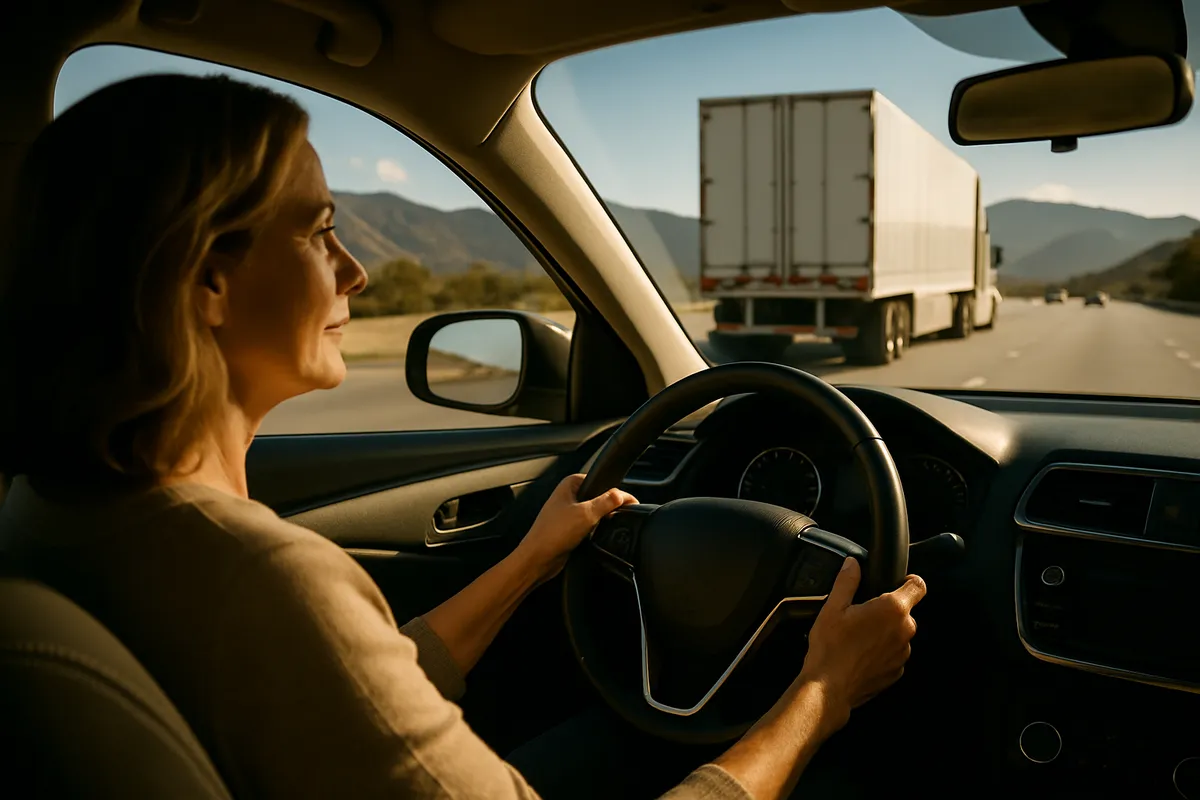
Semi-trucks are among the most dangerous vehicles on Southern California’s roads, and one look at an 80,000-pound rig bearing down the I-10 makes the obvious hazards clear. But the dangers of a semi-truck accident go well beyond size and weight — from braking physics and volatile cargo to underride geometry and driver fatigue, much of what makes these crashes catastrophic is invisible until it’s too late.
The numbers tell the story of who pays the price. According to the National Highway Traffic Safety Administration, 5,472 people died in crashes involving large trucks in 2023 — and roughly 70 percent of them were occupants of other vehicles or nonoccupants, not the truck’s own occupants. When a semi and a passenger car collide, the car loses.
Slow Braking Distances: Physics Doesn’t Negotiate
A modern passenger car traveling 60 mph can stop in well under 150 feet; high-performance vehicles do it in far less. A loaded tractor-trailer is a different animal entirely. Federal Motor Carrier Safety Administration guidance notes that large trucks can need up to 40 percent more stopping distance than cars — often translating to hundreds of feet, roughly the length of one to two football fields at highway speed — and even more when heavily loaded or on wet pavement.
The implication is chilling: by the time a trucker sees a hazard, the outcome may already be decided. Even a driver with excellent reflexes is commanding a machine that physically cannot respond in time. That’s why following distance, speed management, and brake maintenance are heavily regulated — and why violations of those rules are central evidence in truck accident cases.
Dangerous Cargo: The Crash After the Crash
Semi-trucks haul everything, including flammable fuels, toxic chemicals, and explosive materials. Even a relatively minor collision can turn catastrophic when cargo escapes. In one widely reported 2023 incident, a tanker truck fire on I-95 in Pennsylvania generated enough heat to collapse an entire section of overpass. Victims caught near a hazmat release face burns, disfigurement, respiratory injury, and death.
Cargo doesn’t have to be hazardous to be dangerous. Unbalanced loads — common with garbage, lumber, and irregularly stacked freight — raise a trailer’s center of gravity or shift mid-turn, dramatically increasing rollover risk. When a load shift causes a crash, liability may extend beyond the driver to the shipper or loading company, which is one reason truck cases so often involve multiple defendants.
Underride Accidents: The Deadliest Geometry on the Road
Of all truck crash types, underride collisions are among the most feared. They occur when a passenger vehicle slides beneath a trailer, and the trailer’s edge intrudes at windshield height — shearing into the passenger compartment with catastrophic, often fatal, head and brain injuries to occupants.
Rear underride guards have long been federally required on trailers, and standards have tightened over time. But guard strength varies, older trailers remain in service across Southern California, and side underride protection is still not universally required. When a guard fails or was missing, the trailer manufacturer or owner can share liability alongside the driver and carrier.
Trucker Negligence: The Human Factor
Finally, the hazard no regulation has eliminated: negligence behind the wheel. Long-haul trucking is grueling, monotonous work, and it produces predictable failures:
- Fatigue, despite federal hours-of-service limits — and falsified or manipulated logbooks still surface in litigation
- Stimulant use to stay awake on long hauls, which impairs judgment as it wears off
- Distraction, particularly phone use during monotonous stretches
- Speeding and aggressive driving under delivery deadline pressure
When trucker negligence causes a crash, the motor carrier is typically liable for its employee’s conduct — and independent evidence like electronic logging device data, GPS records, and dashcam footage can prove what really happened, provided someone acts to preserve that evidence before it disappears.
What Victims Should Know About Truck Accident Claims
Truck cases differ from ordinary car accident claims in three ways that matter:
- Multiple liable parties. Driver, carrier, cargo loader, maintenance contractor, and manufacturers may all share fault — each with separate insurance.
- Sophisticated defense. Trucking insurers dispatch rapid-response teams to crash scenes within hours. Victims need equally fast investigation on their side.
- Hard deadlines. California’s two-year statute of limitations (CCP § 335.1) governs most claims, with a six-month government claim deadline when public entities are involved. Evidence deadlines are shorter still — some trucking records may be lawfully destroyed within months.
California’s pure comparative negligence rule (Li v. Yellow Cab Co., 1975) also means that even if an insurer pins partial blame on you, your recovery is reduced — never eliminated.
Talk to a Former Insurance Defense Attorney — Free
If a semi-truck crash has injured you or taken someone you love anywhere in Southern California — Los Angeles County or the Inland Empire — Miracle Law, APC can move quickly to preserve evidence and identify every liable party. Founder Tamar Miot spent years defending insurance companies, so she knows the trucking-defense playbook from the inside. The consultation is free, and there’s no fee unless we win. Call (888) 843-5290.
Frequently Asked Questions
Why do semi-trucks take so long to stop?
Physics. A loaded rig can weigh up to 80,000 pounds — 20 to 30 times a passenger car — and all that momentum must be dissipated through air brakes that themselves have a lag time. FMCSA guidance notes trucks need substantially longer stopping distances than cars, up to 40% farther in good conditions and worse when loaded or on wet pavement. By the time a trucker perceives a hazard at highway speed, avoiding the collision is often already impossible.
What is an underride accident?
An underride crash occurs when a passenger vehicle slides beneath a truck's trailer, and the trailer edge intrudes at windshield level — shearing into the passenger compartment. These are among the deadliest truck crash types. Rear underride guards are federally required, but guard strength varies and many older trailers on the road offer limited side protection.
Who can be held liable after a Southern California truck accident?
Potentially several parties: the truck driver, the motor carrier that employed them, the cargo loader or shipper if an unbalanced or unsecured load contributed, a maintenance contractor, or a parts manufacturer. Identifying every liable party — and every insurance policy — is usually what separates a policy-limits settlement from full compensation.
How long do I have to sue after a truck accident in California?
Generally two years from the crash under California Code of Civil Procedure § 335.1, and six months for the claim step if a government entity is involved. But trucking evidence — driver logs, black-box data, camera footage — can be lost or lawfully destroyed much sooner, so preservation demands should go out within days.
Injured? Talk to a former insurance defense attorney — free.
No fee unless we win. We'll call you back within 10 minutes. Hablamos Español.
Call (888) 843-5290Find Out If You Have a Case
Free case review. We'll call you back within 10 minutes.