
The Importance of Police Reports in California Car Accident Cases

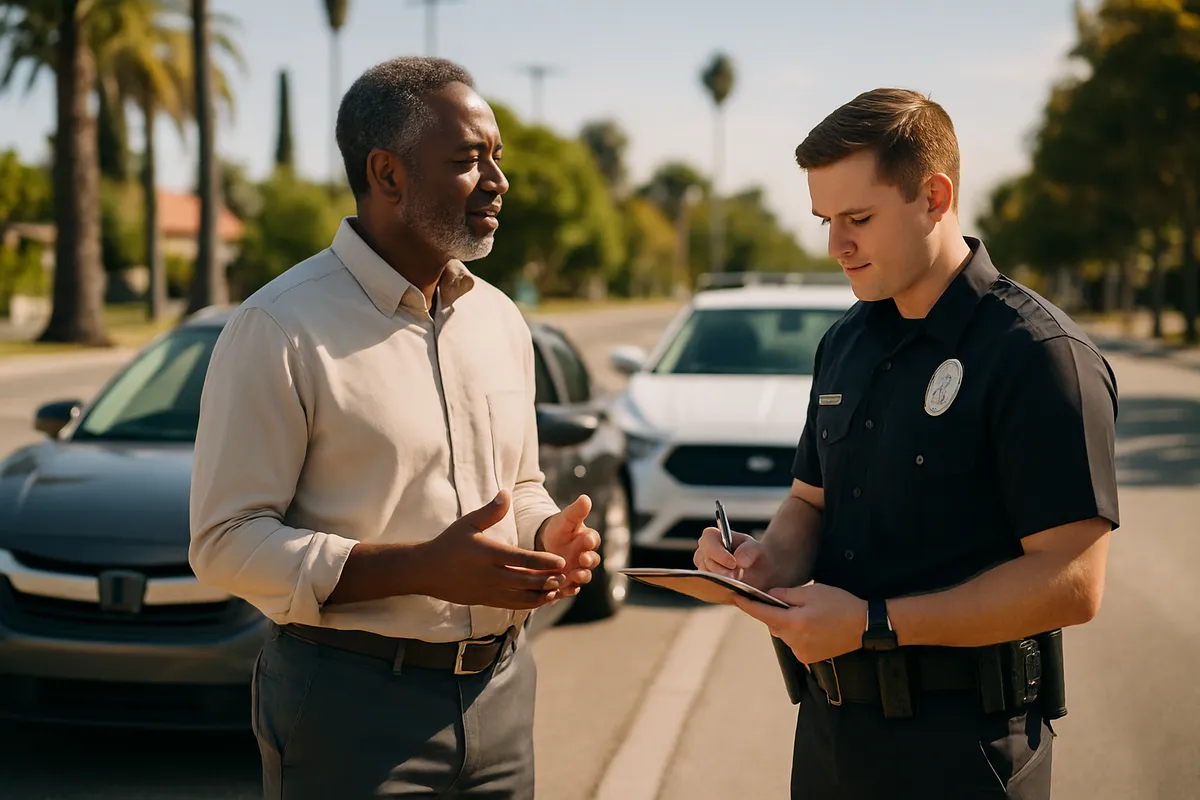
Police reports in California car accident cases occupy a strange position: they are among the most influential documents in any injury claim, yet they are generally not admissible at trial. Understanding that paradox — and how to use a report to your advantage — can make a real difference in what you recover. With about 6.14 million police-reported traffic crashes nationwide in 2023 according to the National Highway Traffic Safety Administration, these reports are generated constantly, and insurers read them closely.
Here’s what a California police report contains, how to get yours, and why it matters even though a jury may never see it.
What Is a Traffic Collision Report?
The formal name for a California car accident police report is a traffic collision report. When officers respond to a crash, they document the incident in a standardized format that typically includes:
- Time and location. These basics matter more than you’d think. If evidence shows a driver started drinking at 8:00 p.m. and the report places the crash at 8:30 p.m., the timeline itself supports intoxication. If a defendant blames a “confusing construction zone,” a report placing the collision blocks away dismantles that story.
- Witness names and contact information. Independent witnesses are often the most reliable evidence available when there’s no video. The report is how your lawyer finds them.
- Scene diagrams. Many reports include a drawn diagram showing vehicle positions, point of impact, travel directions, and nearby signals or signs.
- Vehicle and driver details. Estimated speeds, visible damage, insurance information, and driver statements.
- Citations, violations, and arrests. If the other driver was cited for speeding or arrested for DUI, it will be in the report.
- The officer’s opinion on cause. Most reports conclude with the responding officer’s assessment of the primary collision factor — effectively a preliminary fault determination.
That last item is why insurance adjusters treat the police report as a starting point for nearly every liability decision. California recorded 4,061 traffic deaths in 2023 per the California Office of Traffic Safety, and in serious-injury and fatality cases, the investigating agency’s report becomes even more detailed and consequential.
How to Obtain Your Police Report
If the California Highway Patrol investigated your crash, request the report by filing Form CHP 190, in person or by mail, at the nearest CHP area office. Any “party of interest” can request it — drivers, registered owners, passengers, and parents or guardians of injured minors. Processing is usually quick, though requirements can vary by county.
One common complication: the CHP only investigates certain collisions, generally those on state highways and in unincorporated areas. If your crash happened on a city street, the report belongs to that city’s police department or the county sheriff. Figuring out which agency has your report can be surprisingly confusing after a serious crash. A California car accident lawyer can identify the investigating agency and obtain the report on your behalf — you don’t have to handle any of it yourself.
Are Police Reports Admissible at Trial?
Generally, no — and this surprises most people. Police reports are classic hearsay: they are out-of-court statements offered to prove the truth of what they assert, and much of their content consists of the officer recounting other people’s statements. On top of the hearsay rules, California Vehicle Code § 20013 expressly provides that required accident reports “shall not be used as evidence in any trial.” California courts have applied that rule consistently.
So a jury will likely never read the report itself. But that’s far less important than it sounds.
Why Police Reports Still Decide Cases
The overwhelming majority of California car accident cases — commonly estimated at well over 90% — settle before trial. In settlement negotiations with insurance adjusters, formal evidence rules don’t apply, and the police report often functions as the de facto liability ruling. An adjuster looking at a report that cites the other driver for running a red light knows exactly how a trial would probably go, and values the claim accordingly.
Even in the rare case that reaches trial, the report earns its keep indirectly:
- It’s a roadmap to admissible evidence. Your lawyer uses it to locate and interview every witness, then obtains sworn statements that are admissible.
- The officer can testify. While officers generally can’t offer their report’s fault conclusion, they can describe everything they personally observed at the scene — skid marks, vehicle positions, statements they heard, signs of intoxication.
- It anchors the investigation. The diagram and physical details guide accident reconstruction experts and help your attorney identify video footage and other evidence before it disappears.
A police report is one piece of a larger evidence picture that also includes medical records — which is why immediate medical treatment matters just as much as the report itself.
Don’t Wait to Act on Your Report
California gives most injury victims two years from the crash to file suit (Code of Civil Procedure § 335.1), but the practical deadlines are much shorter. Witnesses listed in the report move and forget; camera footage gets overwritten in days. The sooner your attorney has the report in hand, the sooner the real investigation can begin. And if a government vehicle or dangerous road condition was involved, you may have only six months to file a government claim.
Put a Former Insurance Defense Attorney on Your Side
Miracle Law founder Tamar Miot spent years defending insurance companies, reading police reports the way adjusters do — hunting for anything that shifts blame onto the victim. Now she uses that insight for injured Californians, from Los Angeles to the Inland Empire. If you’ve been hurt in a crash, the consultation is free and there’s no fee unless we win. Call (888) 843-5290 today.
Frequently Asked Questions
How do I get a copy of my police report after a California car accident?
If the California Highway Patrol investigated, file Form CHP 190 in person or by mail with the local CHP area office. If a city police department or sheriff handled the crash, request the report from that agency. Any party of interest — drivers, vehicle owners, passengers, or parents of minors — can request it, and your attorney can obtain it on your behalf.
Are police reports admissible in California personal injury trials?
Generally, no. Police reports are considered hearsay because they recount statements made outside of court, and California Vehicle Code § 20013 provides that accident reports shall not be used as evidence at trial. However, the officer can still testify about what they personally observed, and the report guides your lawyer to witnesses and other admissible evidence.
If police reports can't be used at trial, why do they matter?
Because most car accident cases settle out of court, where trial evidence rules don't apply. Insurance adjusters rely heavily on the police report when assigning fault and valuing claims. A report that documents the other driver's citation or intoxication dramatically strengthens your negotiating position.
What if the police report gets the facts wrong or blames me?
You can request a supplemental report or submit your own statement, and an attorney can counter an unfavorable report with witness interviews, photos, video footage, and accident reconstruction. An officer's preliminary fault assessment is influential but not final — insurers and juries can and do reach different conclusions.
Injured? Talk to a former insurance defense attorney — free.
No fee unless we win. We'll call you back within 10 minutes. Hablamos Español.
Call (888) 843-5290Find Out If You Have a Case
Free case review. We'll call you back within 10 minutes.