
Lane Splitting Motorcycle Accident
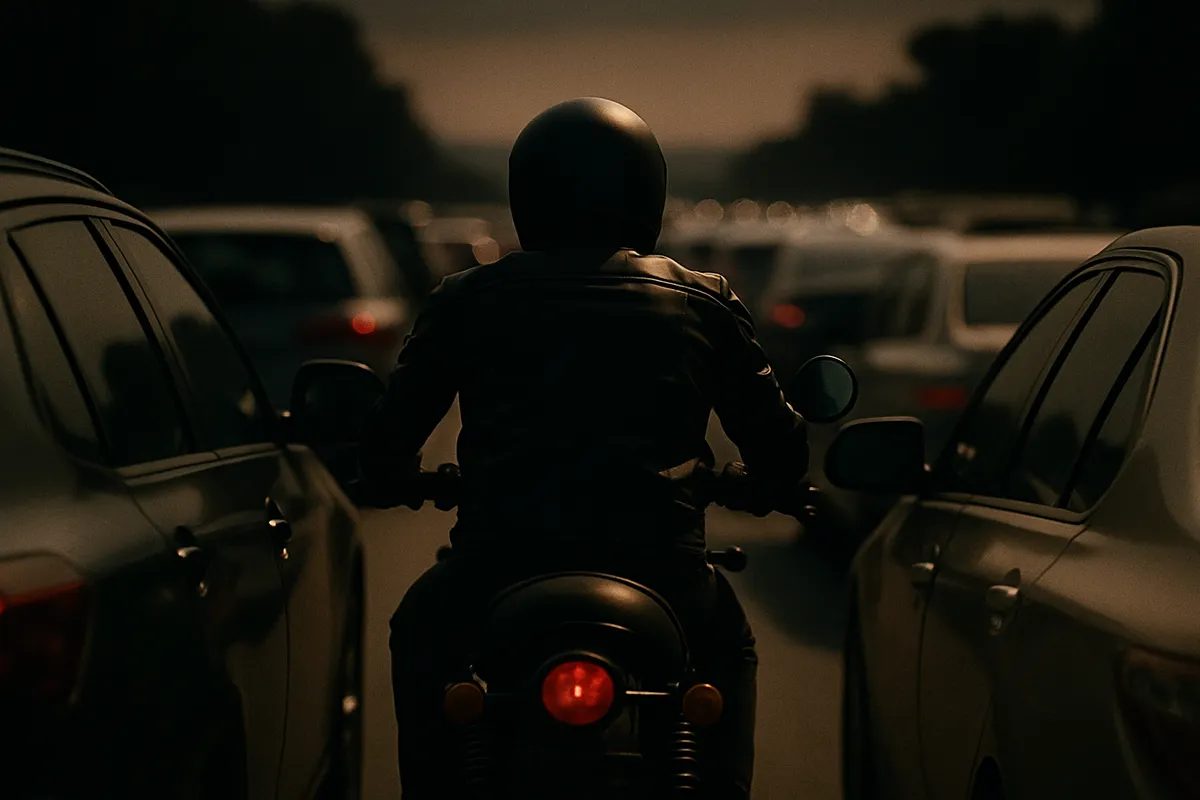
Lane splitting is legal in California — the only state in the country that has formally authorized it — yet after a lane splitting motorcycle accident, riders are routinely treated as if they broke the law. Drivers insist the motorcycle “came out of nowhere.” Adjusters hint that splitting lanes was reckless. If you were hurt while riding lawfully between lanes, understanding how California actually evaluates these crashes is the first step toward protecting your claim.
Miracle Law represents injured riders across Los Angeles and the Inland Empire in motorcycle accident claims, including the fault disputes that make lane splitting cases uniquely contentious.
Lane Splitting Is Legal in California — Here’s What That Means for Fault
In 2016, Assembly Bill 51 added lane splitting to the California Vehicle Code and directed the California Highway Patrol to develop safety guidelines for riding between lanes of slowed or stopped traffic. That makes California the only state where lane splitting is expressly lawful.
Two practical consequences follow:
- Splitting lanes is not negligence by itself. An insurer cannot point to the fact that you were between lanes and call the case closed. The analysis turns on conduct — yours and the driver’s — not on your lawful position on the road.
- Drivers must anticipate motorcycles between lanes. In California traffic, lane splitting is common and legal. A driver who changes lanes without signaling or checking mirrors has breached a duty of care, and that breach is usually the true cause of the crash.
The CHP’s lane splitting safety tips are guidance, not binding law. Insurers sometimes treat them as strict rules to argue a rider was “unsafe.” We push back by separating enforceable statutes from recommendations — and by focusing the analysis on what each party actually did.
Notably, safety research supports lane splitting done prudently. A UC Berkeley study commissioned by California’s Office of Traffic Safety, which reviewed nearly 6,000 motorcycle-involved collisions, found that lane-splitting riders were less likely to suffer head and torso injuries than riders who were not splitting when crashes occurred at modest speed differentials.
How Lane Splitting Motorcycle Accidents Usually Happen
Most of these crashes come down to a driver failing to account for a lawfully positioned motorcycle:
Unsafe lane changes in stop-and-go traffic
A driver drifts or merges without signaling, glances at a mirror without truly looking, and moves directly into a rider’s path. In dense traffic, the rider has almost no escape route.
Distracted driving
Phones, navigation screens, and in-dash displays pull attention exactly when awareness matters most. A driver looking down for two seconds in slowed traffic can miss a motorcycle approaching between lanes entirely.
Aggressive or intentional blocking
Some drivers resent lane splitting and deliberately close gaps, swerve toward riders, or speed up to prevent a pass. That conduct goes beyond ordinary negligence — it’s conscious risk creation, and evidence of it can significantly change how fault and damages are evaluated. If aggression escalated into deliberate targeting, see our page on road rage motorcycle accidents.
Comparative Fault: The Insurer’s Favorite Weapon
California applies pure comparative negligence: fault is divided by percentage, and your recovery is reduced by your share — never eliminated outright. A rider found 20% at fault for a $100,000 claim still recovers $80,000.
Because they usually can’t deny these claims outright, insurers work the percentages instead. Common tactics include:
- Alleging excessive speed while splitting, without physical evidence to support it
- Treating CHP safety guidelines as if they were traffic laws
- Leaning on jury-pool stereotypes about “reckless bikers”
We counter with evidence: vehicle positioning and damage patterns, dashcam and surveillance footage, skid marks, witness statements, and reconstruction analysis where needed. Our guides on proving liability in California motorcycle cases and how comparative negligence works explain this framework in more depth.
What Your Claim May Be Worth
Lane splitting crashes often cause serious harm — riders absorb impacts with no protective frame. Compensation can include emergency and ongoing medical care, future treatment, lost wages and reduced earning capacity, motorcycle repair or replacement, and pain and suffering. Common injuries range from fractures to traumatic brain injuries.
Miracle Law’s results include a $5 million wrongful death recovery and a $1.1 million car accident recovery. Past results don’t guarantee future outcomes, but they show insurers we build cases for trial, not for quick discounts.
Deadlines matter: most California injury claims must be filed within two years under CCP § 335.1, and claims involving public entities can require a government claim within six months. Camera footage is often overwritten in days.
Talk to a Former Insurance Defense Attorney — Free
Miracle Law founder Tamar Miot spent years as an insurance defense attorney, learning exactly how carriers attack lane splitting claims. Now she uses that playbook for riders. Your consultation is free, and you pay no fee unless we win. Call (888) 843-5290 or contact us online today. Hablamos Español.
Frequently Asked Questions
Is lane splitting legal in California?
Yes. California is the only state that has formally legalized lane splitting. Assembly Bill 51, signed in 2016, defined lane splitting in the Vehicle Code and authorized the CHP to publish safety guidelines. Riding between lanes of slowed or stopped traffic is lawful — an insurer cannot deny your claim simply because you were splitting lanes.
Can I still recover compensation if the insurer says I was partly at fault?
Yes. California follows pure comparative negligence, so your recovery is reduced by your percentage of fault rather than eliminated. Even a rider found 30% responsible can still recover 70% of their damages. Never accept an adjuster's fault assessment without legal review — insurers routinely inflate rider fault to shrink payouts.
What if the driver says they never saw me?
"I didn't see the motorcycle" is an admission, not a defense. Drivers have a legal duty to check mirrors and blind spots before changing lanes, especially in congested traffic where lane splitting is common and lawful. We use vehicle damage patterns, camera footage, and witness accounts to show the driver failed that duty.
How long do I have to file a lane splitting accident claim?
Generally two years from the date of the crash under California Code of Civil Procedure § 335.1. If a public entity is involved — a government vehicle or a dangerous road condition — you may need to file a government claim within six months. Evidence like dashcam and surveillance footage disappears much faster, so contact a lawyer early.
Injured? Talk to a former insurance defense attorney — free.
No fee unless we win. We'll call you back within 10 minutes. Hablamos Español.
Call (888) 843-5290Find Out If You Have a Case
Free case review. We'll call you back within 10 minutes.